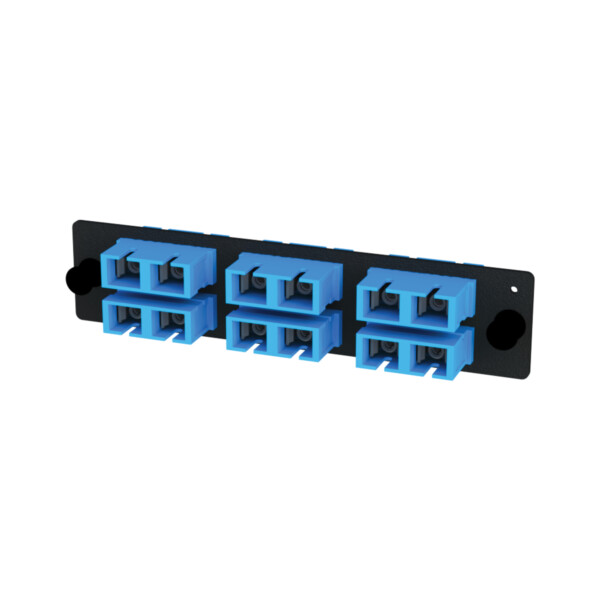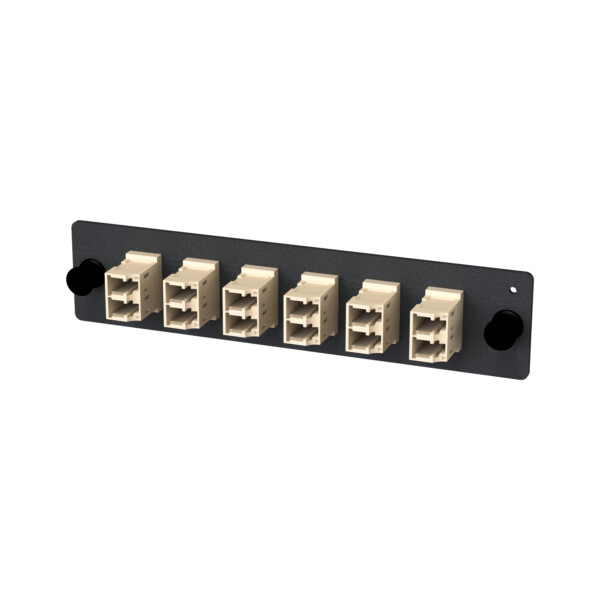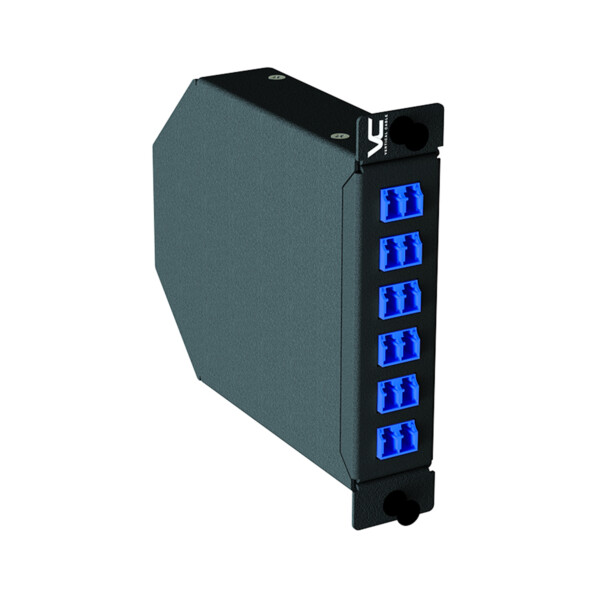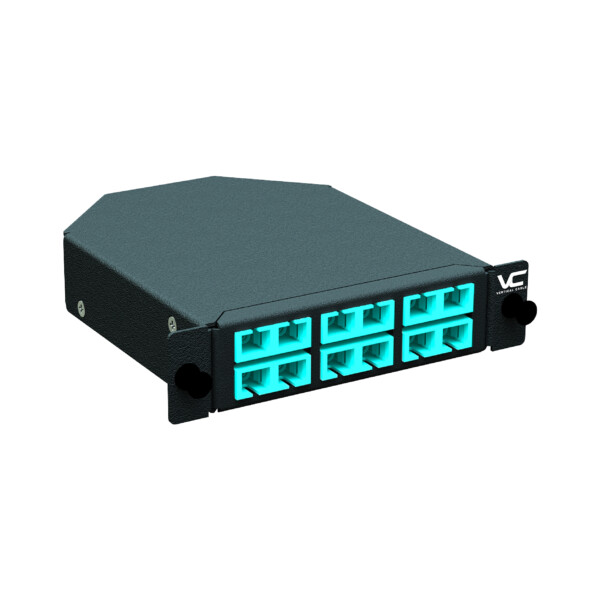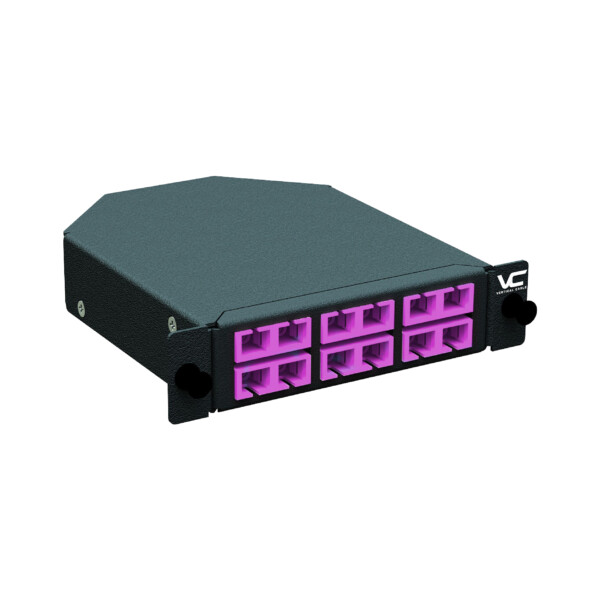
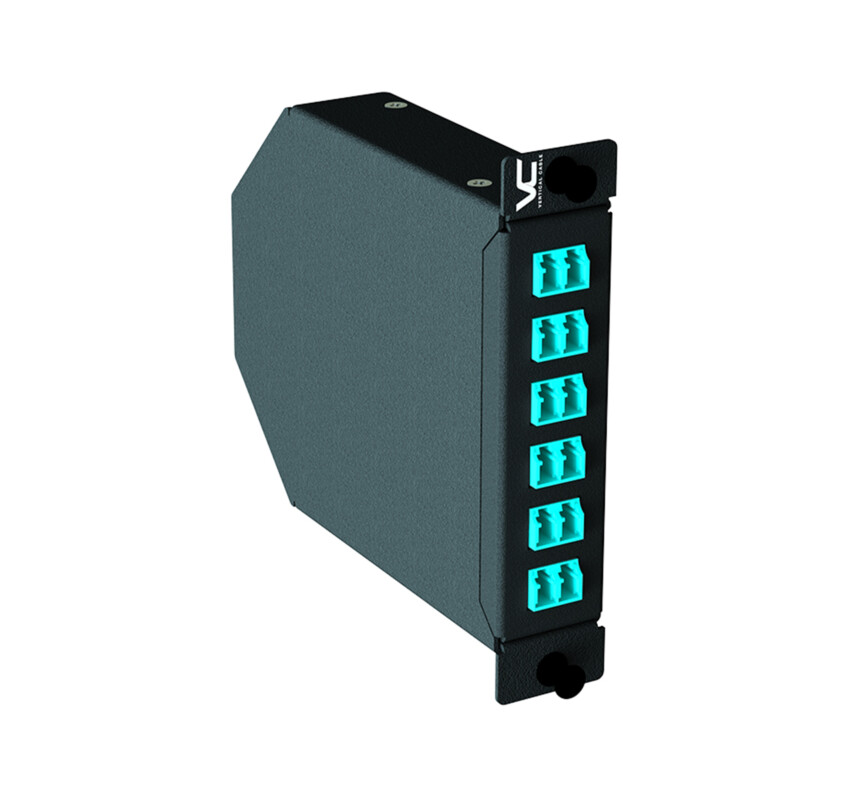
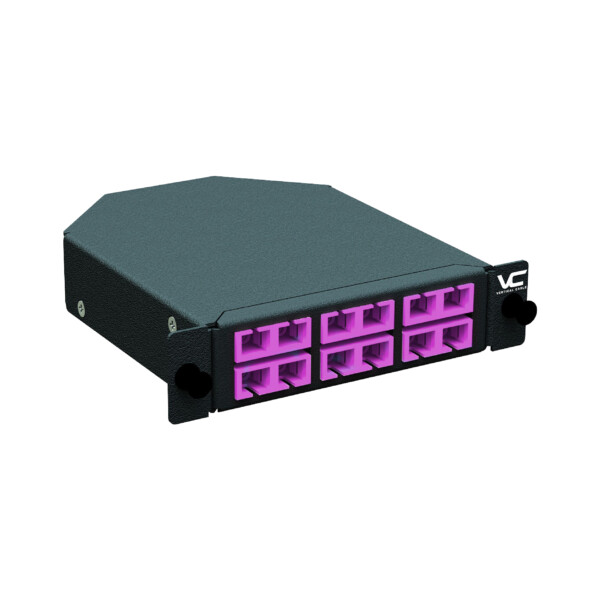
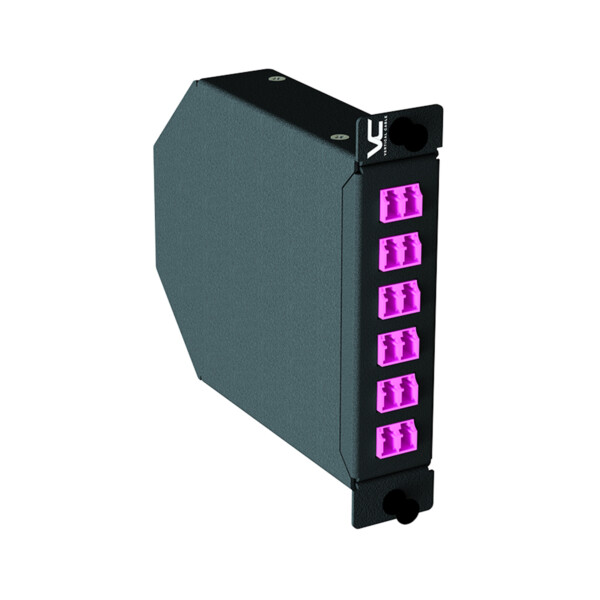
VERTICAL CABLE 264-MCS0312-3A90 – LC MULTIMODE OM3 SPLICING LGX CASSETTE
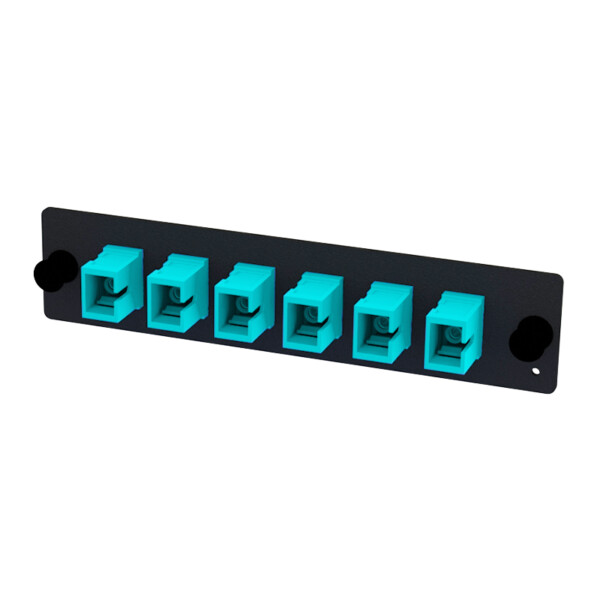
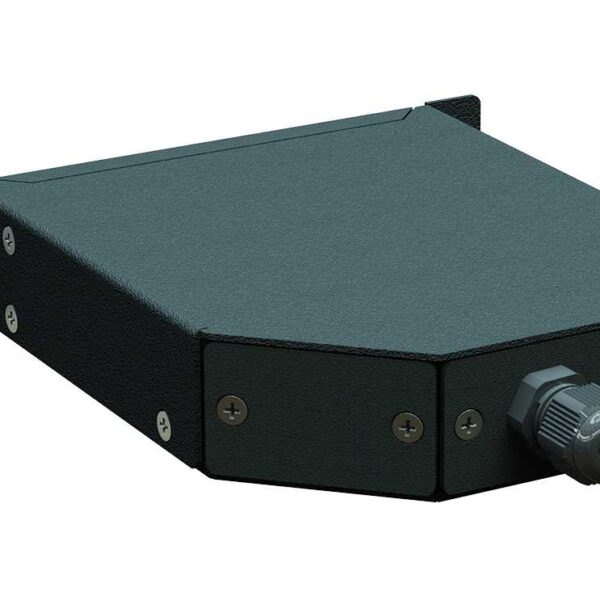
The 264-MCS0312-3A90 is a 12-fiber LC multimode LGX Splicing Cassette built to terminate outside-plant or backbone fiber directly through fusion splicing. Functioning as a self-contained splice cassette, it ships as a complete kit with matching pigtails, splice holders, and protection sleeves, so there’s no need to source components separately. Built to the standard LGX footprint with a rear M12/PG7 cable gland entry, this LGX Splicing Cassette gives installers a clean, field-terminated alternative to pre-connectorized MPO trunks for OM3 multimode networks.
KEY FEATURES
Here’s what makes the 264-MCS0312-3A90 an ideal LGX Splicing Cassette:
- 12-Fiber LC Multimode Configuration: Supports 12 fusion-spliced fibers terminated to LC connectors, optimized for OM3 performance.
- Complete Splicing Kit: Includes ANSI/TIA-598 color-coded 900 µm pigtails matching connector type and fiber count — a full fiber splice tray solution in one enclosure.
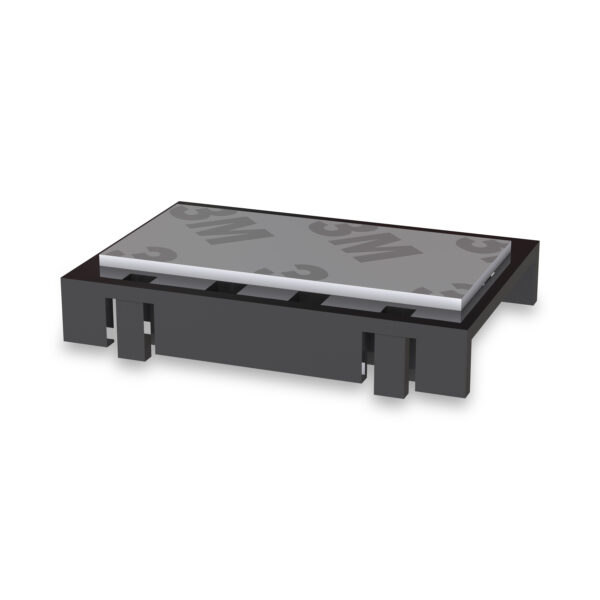
- Splice Holders and Protection Sleeves: Ships with splice holders matched to fiber count and 265-SLV01-3A splice protection sleeves.
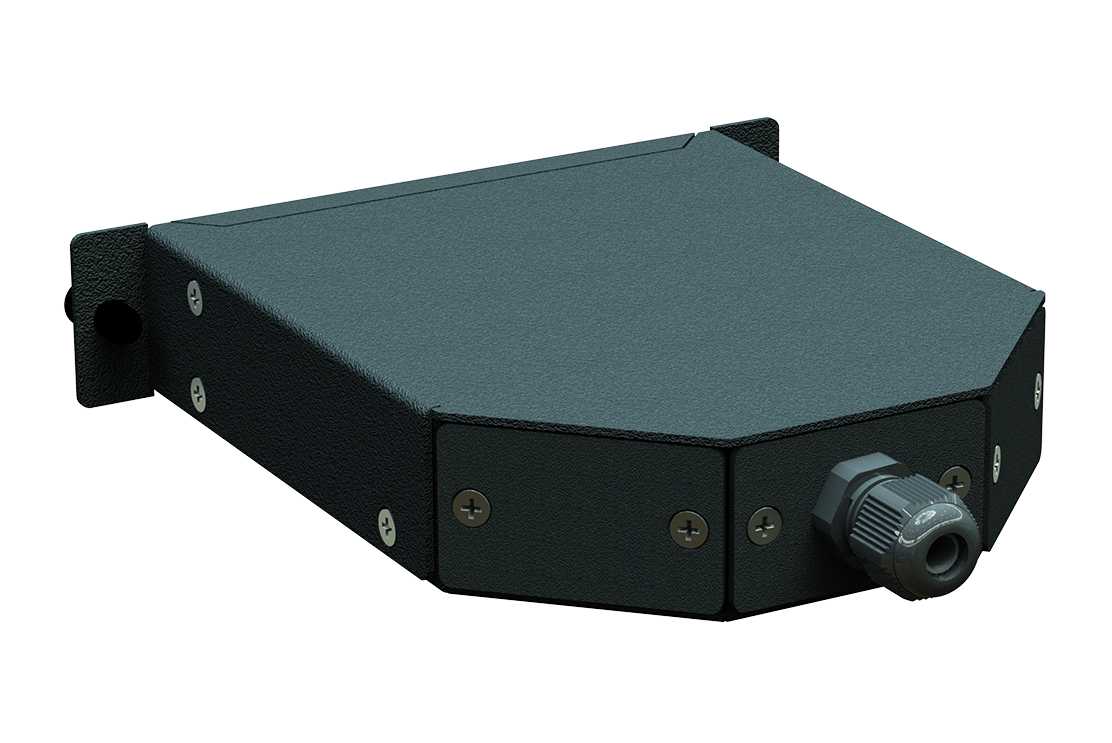
- Rear M12/PG7 Cable Gland Entry: Accepts incoming cable with an OD of 0.08–0.25 in (2–6.5 mm) for direct splicing.
- Standard LGX Footprint: Fits standard LGX-compatible enclosures and mounting hardware, working as a modular fiber cassette within larger fiber splice enclosures.
- Low Insertion Loss: SC/LC interfaces rated at 0.3 dB or lower, in line with TIA-568.3 splice loss requirements for fusion and mechanical splices.
- Zirconia Ceramic Sleeves: One-piece front adapter construction with split ceramic sleeves for durable, low-loss mating.
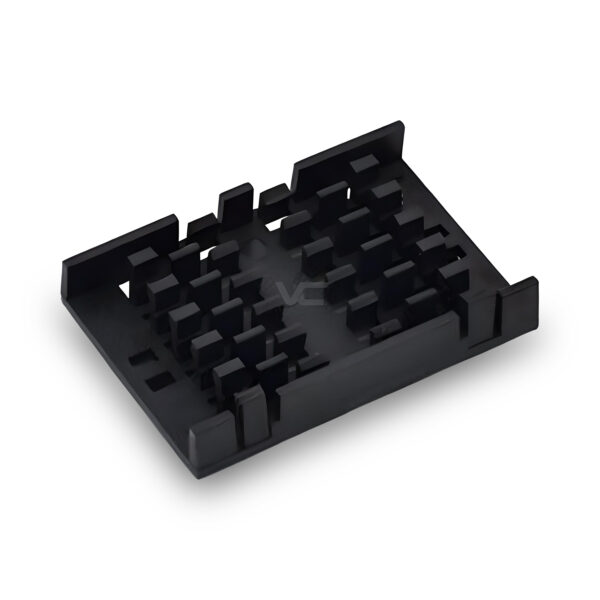
- Additional Kit Hardware: Includes base cover, front bracket with installed adapters, rear cable gland adapter plate, and 2 blank rear adapter plates.
- Telcordia GR-326-CORE Compliant: Meets carrier-grade connector and splice hardware standards.
APPLICATIONS
The 264-MCS0312-3A90 LGX Splicing Cassette excels in field-terminated multimode fiber installations:
- Outside Plant (OSP) Terminations: Fusion splice incoming OSP fiber directly to LC connectors without a separate splice tray or enclosure.
- Data Centers: Terminate multimode backbone cable runs where pre-connectorized MPO trunks aren’t practical or available.
- Telecommunications Rooms: Provide a clean, standardized splice-cassette termination point within MDFs and IDFs.
- Enterprise Fiber Networks: Support direct-splice multimode connections for legacy or non-MPO fiber plant.
- Central Offices and Carrier Networks: Meet carrier-grade splice-termination requirements consistent with Telcordia and TIA guidance.
WHY CHOOSE THE 264-MCS0312-3A90 LGX CASSETTE?
Professionals choose the 264-MCS0312-3A90 for its all-in-one splicing kit, reliable multimode performance, and universal LGX fit. Here are 5 reasons to specify it for your next project:
- Complete Splicing Solution – Ships with matching pigtails, splice holders, and protection sleeves, eliminating separate component sourcing.
- Reliable OM3 Performance – LC multimode interfaces deliver low insertion loss for standard fiber networking applications.
- Direct OSP Termination – Rear cable gland entry accommodates a range of cable diameters for direct fusion splicing.
- Standard LGX Compatibility – Fits existing LGX enclosures and mounting hardware without modification.
- Carrier-Grade Reliability – Built to Telcordia and ANSI/TIA-568.3-D standards that installers already trust.
FAQs
What is a splice cassette?
A splice cassette is a modular fiber housing that holds fusion or mechanical splices, splice protection sleeves, and pigtails in one place, connecting incoming fiber to connectorized ports at the front. It’s the enclosed, rack-ready cousin of a standalone fiber splice tray.What’s the difference between fusion splicing and mechanical splicing?
Fusion splicing melts two fiber ends together with an electric arc, typically achieving loss under 0.1 dB. Mechanical splicing aligns fiber ends inside a small mechanical unit without heat — faster to set up but generally higher loss. The 264-MCS0312-3A90 is designed to house fusion splices for the lowest possible loss.Can a severed fiber optic cable be repaired?
Yes. A cut or damaged fiber can be repaired by cleaving back the damaged section and fusion splicing in a new segment or pigtail, then protecting the splice with a heat-shrink sleeve — the same components included in this cassette’s kit.Does this cassette need a separate splice tray?
No. The splice holders, pigtails, and protection sleeves are all housed within the cassette itself, so it replaces a standalone fiber splice tray in most fiber enclosure setups.
GETTING IT INSTALLED
Once you’ve specified the 264-MCS0312-3A90 for your project:
- Check your cable against the gland. Before it arrives, confirm the incoming fiber cable’s outer diameter falls between 0.08–0.25 in (2–6.5 mm) so it seats properly in the M12/PG7 gland.
- Line up your splicing crew and gear. Fusion splicing needs a trained tech and a fusion splicer on-site — worth confirming both are scheduled before the cassette shows up.
- Map the fiber routing first. Take a few minutes to plan how fibers will route into the tray before you start splicing. It saves headaches later and keeps bend radius in check.
- Splice, test, then label. Once the splices are done, test insertion loss on each fiber and label all 12 LC positions right away — future you (or whoever’s troubleshooting this six months from now) will thank you.
For more premium LGX Cassettes & Accessories, visit Optical Fiber Components & Accessories and discover top-tier solutions today!