
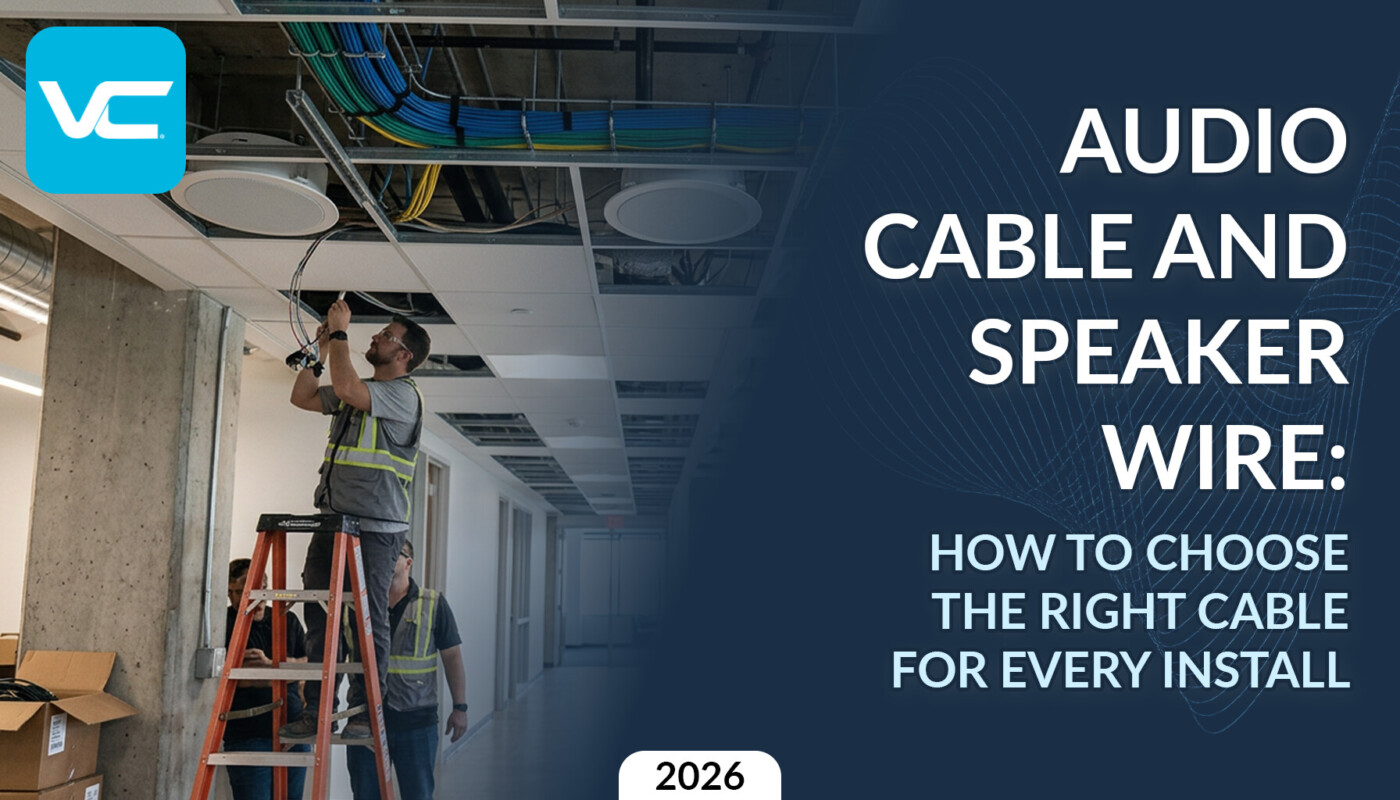
When an A/V system sounds bad, the cable is the last thing most people check, and often the first thing that should have been spec’d correctly. Whether you’re wiring a commercial intercom system, running audio through a finished wall, or pulling outdoor speaker wire to a landscape zone, the cable matters. Signal loss, noise pickup, and early failures all trace back to the same root cause: wrong cable for the job.
This guide covers the full range of audio and speaker wire decisions, gauge selection, shielding, jacket ratings, and direct burial requirements, based on Vertical Cable’s 209 Series, which spans 10 AWG through 18 AWG in shielded and unshielded, 2-conductor and 4-conductor, indoor and direct burial configurations.
Audio Cable vs. Speaker Wire: What’s the Actual Difference?
These terms get used interchangeably in the field, but they’re not the same thing.
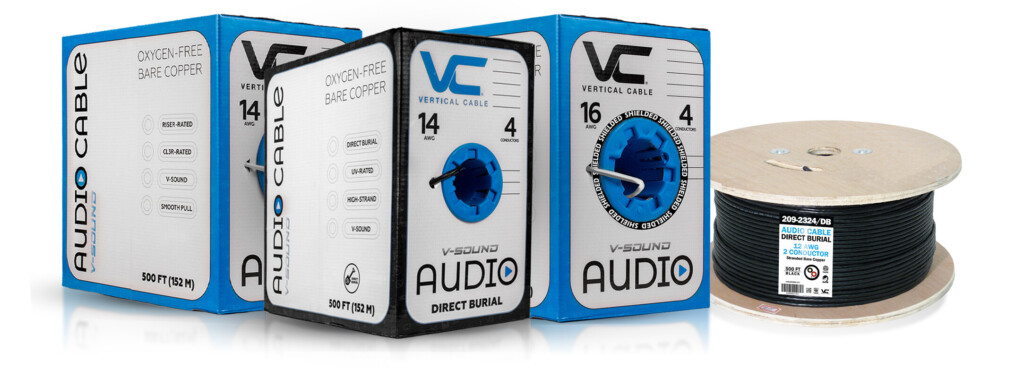
Audio cable is the broader category. It includes shielded and unshielded 2- and 4-conductor cables used for speaker connections, intercom wiring, background music distribution, and paging systems. When runs are long, the environment is electrically noisy, or the signal is line-level (pre-amp), a shielded audio cable is the correct spec. |
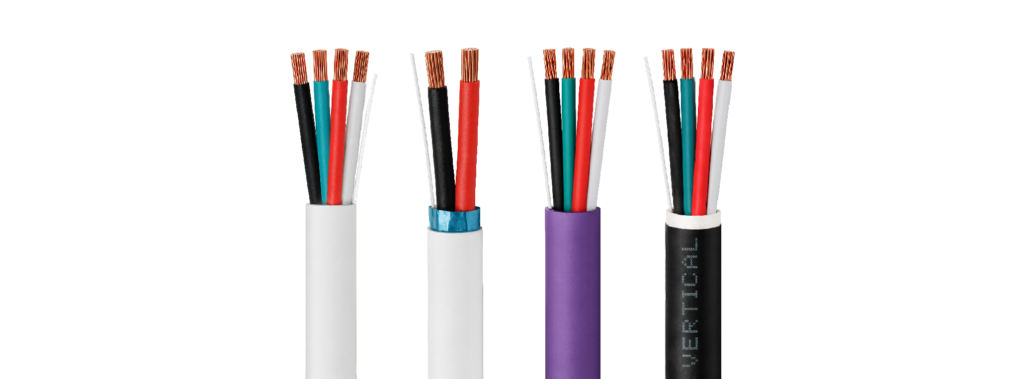
Speaker wire is an unshielded, two-conductor cable carrying an amplified signal from an amp to a speaker. Because the signal is already boosted, the voltage level is high enough that electromagnetic interference (EMI) is rarely a concern, so no shield is needed. |
Vertical Cable’s 209 Series covers both use cases: unshielded options for straightforward speaker-wire applications and shielded versions for EMI rejection in demanding environments.
Choosing the Right Gauge
Gauge is the first decision on every audio run. Underspec and you lose signal over long runs or risk heat on high-power loads. Overspec and you’re paying for cable you don’t need.
The 209 Series runs from 10 AWG through 18 AWG, one of the widest ranges in the category, with 2-conductor and 4-conductor options available across most sizes.
The Guiding Principle Longer run + lower speaker impedance = go up a gauge. When in doubt, overspec; the cost difference between 16 AWG and 14 AWG is negligible compared to a callback. |
10 AWGFor the most demanding speaker applications: 200+ foot runs, low-impedance loads, or high-power commercial drivers. |
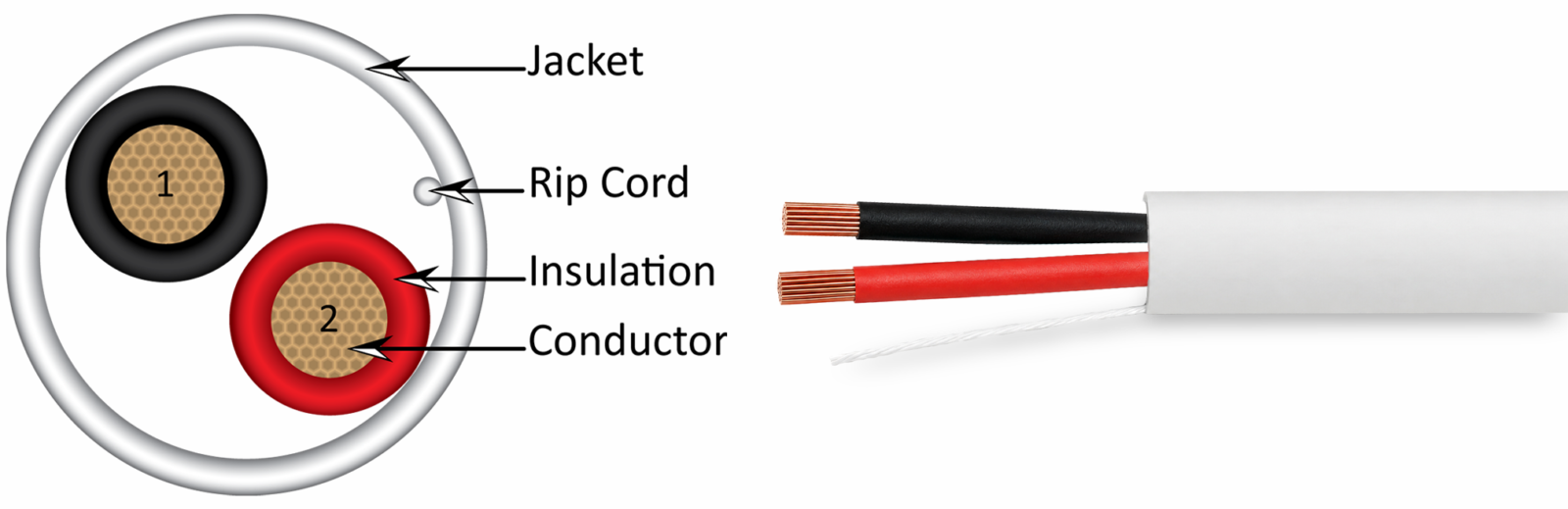
12 AWGRight-sized for high-power commercial speakers, subwoofers, and extended runs in large venues. |
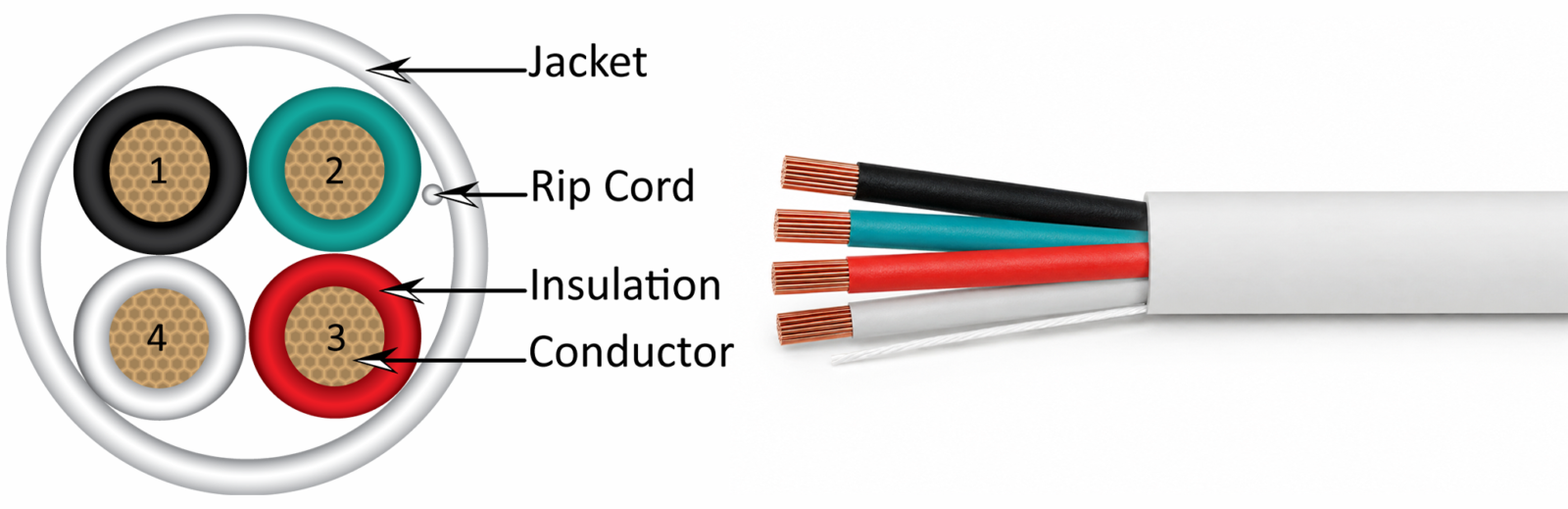
14 AWGThe workhorse gauge for most commercial audio installs. Handles longer runs with confidence and pairs well with 4-ohm and 8-ohm speaker loads. |
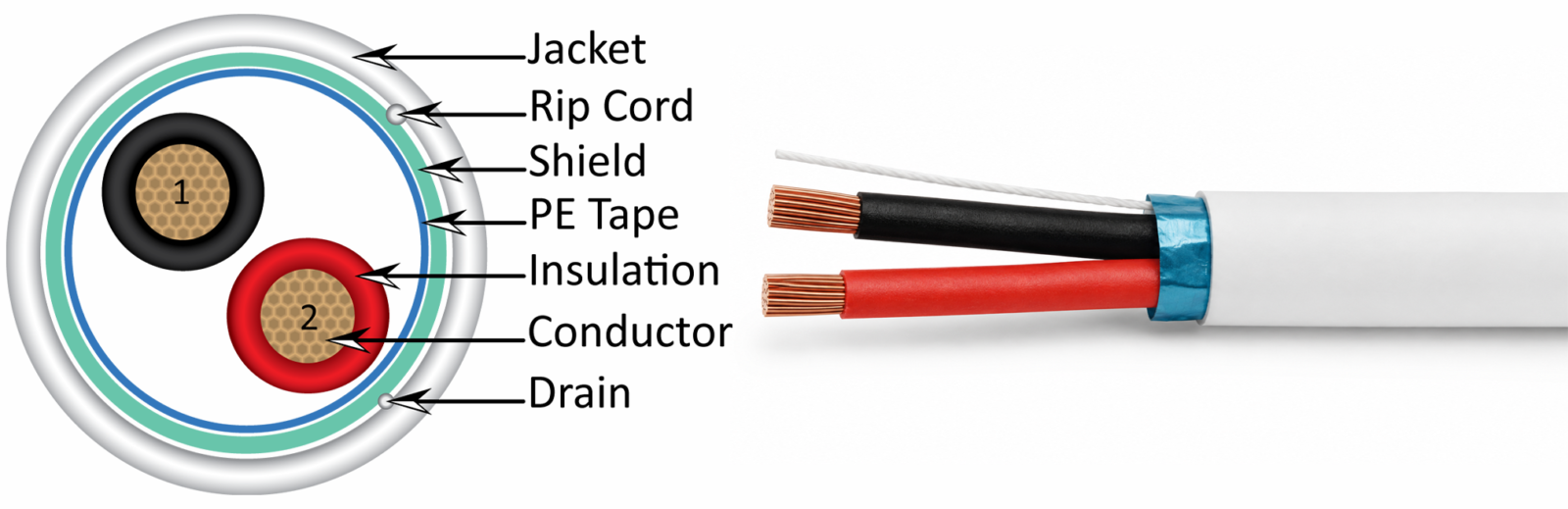
16 AWGThe go-to for residential distributed audio, background music zones, and intercom systems with moderate run lengths. |
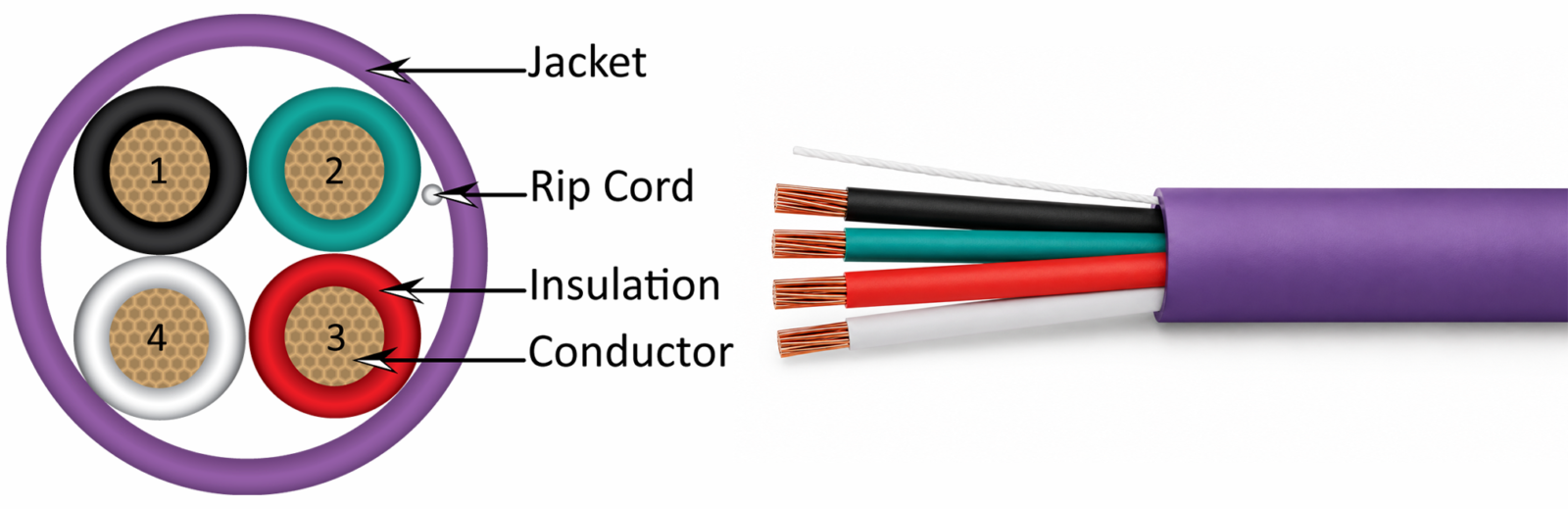
18 AWGLow-power applications, short runs, and ceiling speaker taps in 70V systems where current draw is minimal. |
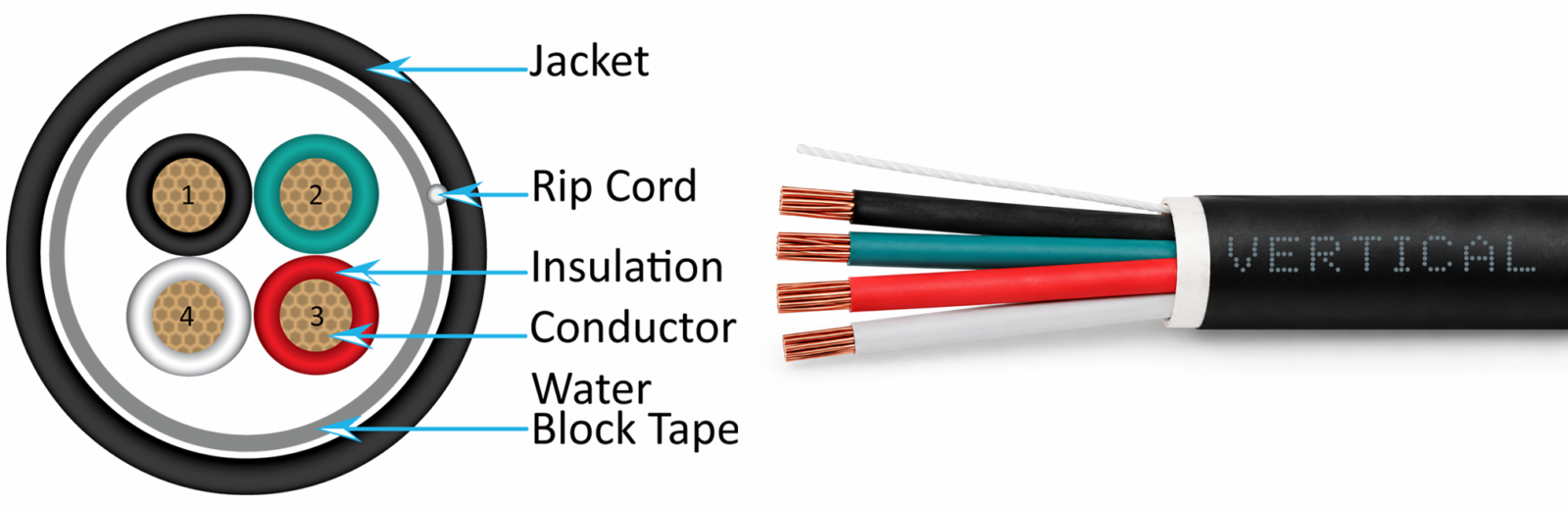
The 4-conductor options are particularly useful for in-wall bi-amp speaker runs or whenever you want to pull a single cable to cover two channels in the same jacket, with less conduit fill and a cleaner installation.
Speaker Cable Distance Reference
Based on commonly accepted industry practices limiting cable resistance and preserving amplifier power to the load.
Speaker Impedance | 16 AWG | 14 AWG | 12 AWG |
|---|---|---|---|
8 Ohm | Up to 50 ft | Up to 100 ft | Up to 150 ft |
4 Ohm | Up to 25 ft | Up to 50 ft | Up to 100 ft |
Show detailed specs
Engineering Reference: Approximate Maximum Cable Distances by Loss Tolerance
Most professional audio designers target 0.5–1.0 dB maximum cable loss. Beyond that, a significant portion of amplifier power is dissipated in the cable rather than delivered to the speaker.
AWG | 4Ω / 0.5 dB | 4Ω / 1.0 dB | 8Ω / 0.5 dB | 8Ω / 1.0 dB | 70V / 0.5 dB |
|---|---|---|---|---|---|
10 AWG | 110 ft | 226 ft | 219 ft | 462 ft | 5,377 ft |
12 AWG | 69 ft | 142 ft | 138 ft | 284 ft | 3,376 ft |
14 AWG | 43 ft | 89 ft | 87 ft | 179 ft | 2,127 ft |
16 AWG | 27 ft | 55 ft | 53 ft | 110 ft | 1,305 ft |
18 AWG | 17 ft | 35 ft | 34 ft | 69 ft | 823 ft |
For longer runs in schools, offices, warehouses, hotels, and retail environments, 70V or 100V distributed audio systems are often the preferred solution. The table above shows why: a 16 AWG cable can extend beyond 1,300 feet at 0.5 dB loss in a 70V system, compared to just 53 feet on an 8-ohm load.
Indoor Audio Cable: Ratings and Code Compliance
For any cable running through walls, ceilings, or riser spaces, NEC compliance is mandatory. The 209 Series indoor lineup carries the ratings inspectors look for:
 | CMR (Communications Multipurpose Cable, Riser) Required for cables run vertically between floors through riser shafts. CMR-rated cable meets flame-resistance requirements for commercial riser installations under NFPA 70 (NEC) Article 800. |  | CL3 (Class 3 Remote-Control and Signal Cable) Rated for in-wall use with higher voltage handling. Confirms flame resistance under NEC Article 725. |
 | ETL Listed Every indoor 209 Series audio cable is independently tested and verified against applicable standards. |  | RoHS Compliant Meets environmental material requirements for projects with green building or regulatory constraints. |
PVC insulation throughout, with stranded oxygen-free copper conductors for flexibility during pulls, particularly in tight conduit or finished-wall fishing scenarios. Available on wooden spools or in pull boxes, depending on the SKU.
When to Use Shielded Audio Cable
Vertical Cable’s shielded 209 Series audio cables use an aluminum foil and PE tape shield with a drain wire, available in 14 AWG and 16 AWG, 2-conductor and 4-conductor configurations. Per CEDIA RP-22, the industry’s recommended practice for distributed audio design, signal integrity, and cable quality is foundational to defined performance levels. Shielding is a key part of that in electrically complex environments.
Specify shielded audio cable when:
- The run passes near power conduits, ballasts, or motors that generate EMI
- You’re in a commercial space with dense electrical infrastructure
- The signal is line-level (pre-amplified), where noise pickup is more audible
- The run passes near lighting dimmers — notorious interference sources in A/V environments
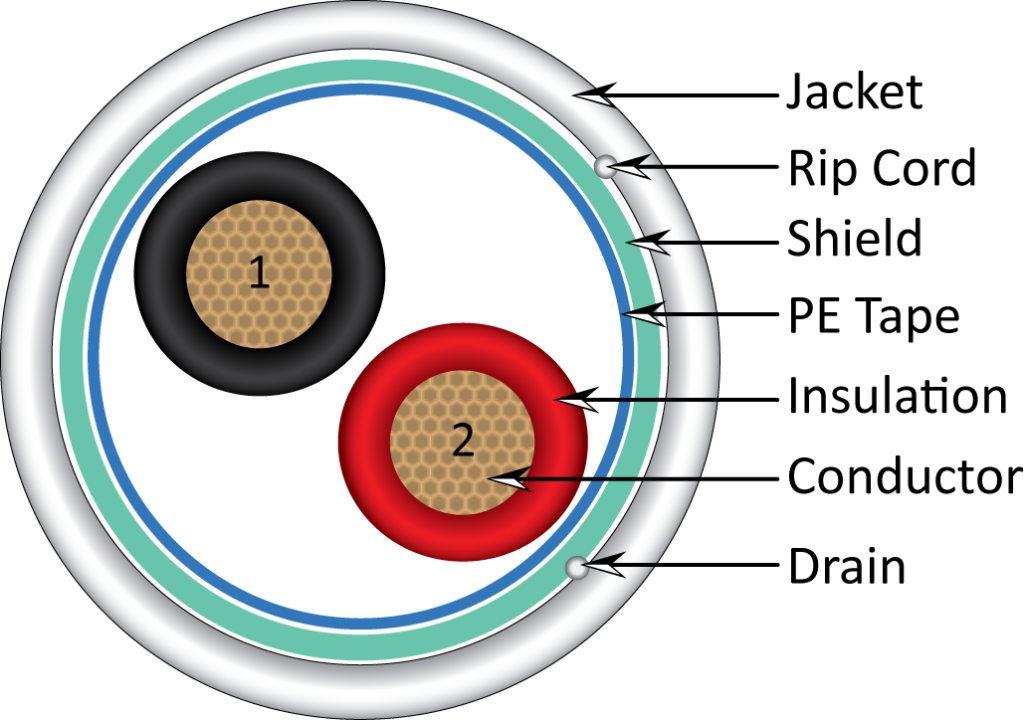
The high-strand construction, 105-strand on 14 AWG options, adds flexibility that holds up through tight bends and congested AV rack terminations. Oxygen-free copper conductors across the board minimize oxidation and ensure consistent signal transfer over the life of the installation.
Commercial A/V vs. Broadcast Audio Applications
Not every audio cable application has the same requirements, and it’s worth being direct about scope.
Vertical Cable’s 209 Series is engineered for commercial audio and speaker applications, including:
- Distributed audio and background music
- Paging and intercom systems
- Hospitality, corporate, education, and retail audio
- Commercial A/V infrastructure
Broadcast environments, television studios, radio stations, and professional recording facilities often require specialized low-capacitance audio cable for highly sensitive circuits. Similarly, broadcast video transport requires SDI coaxial cable. The 209 Series delivers excellent performance for the commercial A/V applications listed above; it’s not intended to substitute for broadcast-grade or low-capacitance studio cable.
Direct Burial Audio Cable: Built for the Elements
Not every audio run stays inside. Landscape speaker systems, outdoor entertainment areas, distributed audio between buildings, and ground-level pathway runs all require cable that can handle burial, and everything that comes with it: moisture, UV, temperature swings, and soil chemistry.
Vertical Cable’s direct burial 209 Series audio cables are purpose-built for underground and outdoor use. The key differences from the indoor versions:
- PE (UV-rated) outer jacket — polyethylene holds up to UV and resists moisture absorption, where PVC would eventually degrade
- Water Block Tape — prevents moisture migration along the cable if the jacket is compromised
- High-strand oxygen-free bare copper conductors — same quality as the indoor line, protected by a tougher jacket system
- Temperature rating of -20°C to 75°C — covers ground temperature extremes across most of North America
The direct burial lineup spans 12 AWG through 18 AWG in 2-conductor and 4-conductor configurations, with the same gauge flexibility underground as inside. The conductor specs don’t change; only the jacket system does.
For outdoor speaker wire that doesn’t need burial, patio runs, covered outdoor spaces, standard indoor cable with weatherproof enclosures at each end is often sufficient. Anywhere the cable touches soil or sits in conduit exposed to ground moisture, go direct burial.
Oxygen Free Copper vs. Copper-Clad Aluminum: Why Conductor Quality Matters
Every cable in the Vertical Cable 209 Series uses oxygen-free bare copper (OFC) conductors. In a category where some manufacturers cut costs with copper-clad aluminum (CCA), this is worth understanding, not as a marketing claim, but as a measurable spec difference.
CCA conductors have higher resistance than solid copper conductors, which means signal loss over distance. They’re also more brittle, prone to cracking at terminations and connection points over the years of thermal cycling. OFC eliminates both failure modes. Combined with high strand counts (65 or 105 strands depending on the SKU), the cable maintains flexibility through tight bends, vibration from active speaker systems, and repeated terminations over the install’s lifetime.
The performance difference doesn’t show up on day one. It shows up at year five, when a CCA installation starts generating callbacks and an OFC installation keeps running.
Frequently Asked Questions
Is an audio cable the same as speaker wire?
Not exactly. Speaker wire is typically an unshielded two-conductor cable carrying amplified signals from an amp to a speaker. Audio cable is a broader term that includes shielded options, four-conductor configurations, and cables used for intercom, line-level, and distributed audio applications. The right choice depends on signal type, run length, and environment.
What gauge speaker wire is best?
For most residential and light commercial installs, 16 AWG is sufficient for runs of about 50–80 feet with 8-ohm speakers. Move to 14 AWG for longer runs, 4-ohm loads, or higher-power applications. Use 12 AWG for demanding commercial systems or for runs exceeding 100 feet where maintaining low impedance is critical.
Should I use 16 or 18 gauge speaker wire?
16 AWG is the safer default for most applications. 18 AWG works for short runs (30–40 feet or less) to low-power speakers or ceiling taps in 70V distributed systems. If you’re unsure of the final run length at rough-in, pull 16 AWG — the headroom is worth it.30–40 feet or less
When do I need a direct burial audio cable?
Any time the cable will be buried in the ground, run through outdoor conduit that may collect moisture, or exposed to UV for extended periods. Standard indoor PVC-jacketed cable will degrade underground. Vertical Cable’s direct-burial 209 Series audio cables feature a UV-rated PE jacket and water-block tape, specifically engineered for underground conditions.
Does shielded audio cable make a difference?
In electrically noisy environments — commercial spaces, near dimmer switches, close to power conduit — yes, significantly. The foil shield on Vertical Cable’s shielded 209 Series audio cables blocks electromagnetic interference that would otherwise introduce audible hum or noise into the signal. For most residential speaker runs away from interference sources, an unshielded cable is fine.
Shop 209 Series Audio Cable Vertical Cable’s 209 Series delivers speaker wire solutions from 10 AWG to 18 AWG, available in 2- and 4-conductor, shielded and unshielded, indoor and direct burial options. |
Planning A Commercial A/V Project And Want To Talk? We’re at InfoComm, Booth #C5034 |