
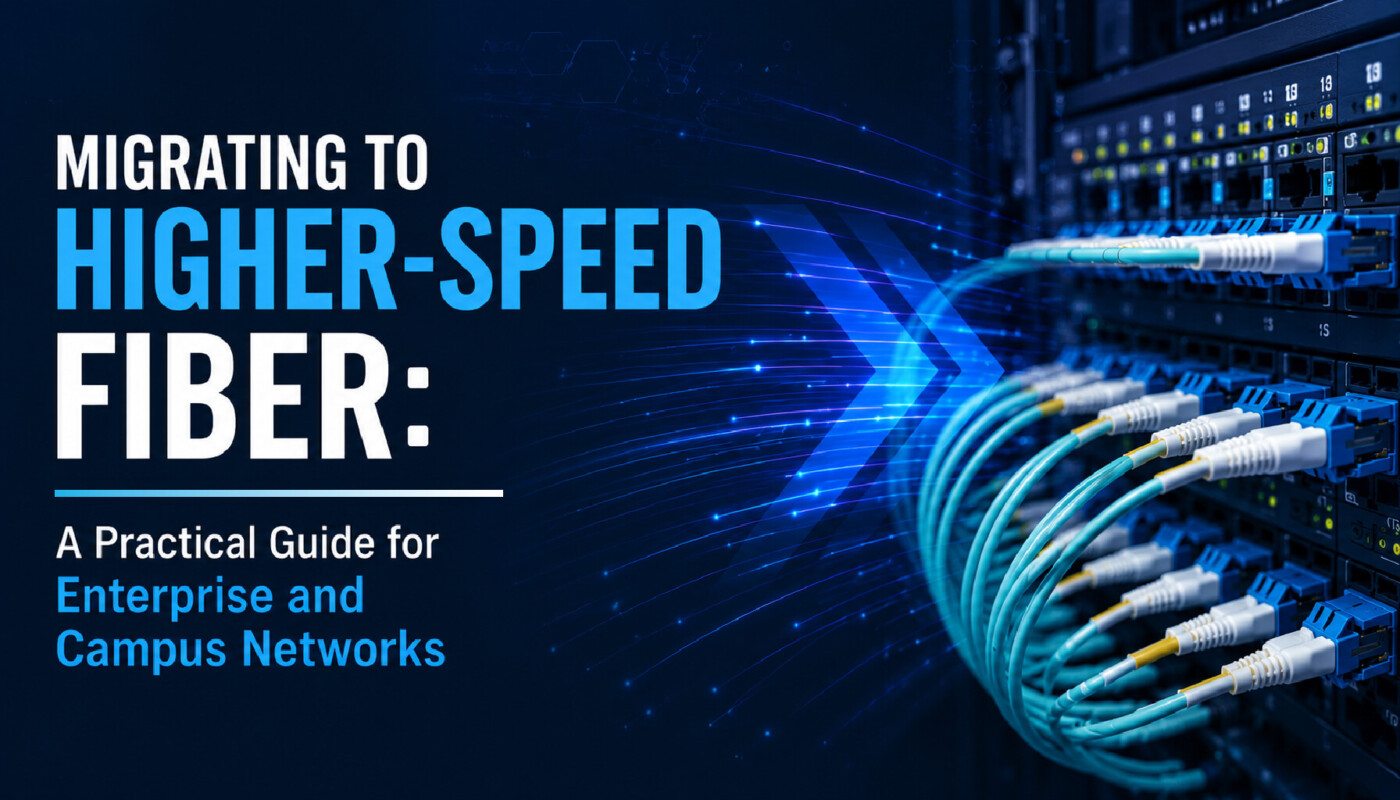
AI adoption is changing how people use broadband networks, and the impact is becoming especially noticeable on fiber connections. Recent industry data indicates that upload traffic has grown from roughly 5–7% of total broadband traffic a few years ago to the high teens today, driven in part by increased use of AI applications.
Because many AI tools depend on fast uploads, low latency, and consistent performance, they tend to work more effectively over fiber than traditional cable connections. As AI becomes part of everyday work and communication, reliable symmetrical connectivity will become increasingly important, according to the Fiber Broadband Association. That shift is happening at the desk of every employee, student, and clinician running AI tools inside an office, classroom, or exam room — not just inside a hyperscale data center.
Most AI headlines focus on hyperscale build-outs that chase 400G and 800G links between GPU clusters, using ultra-high-density SSF connectors such as MDC and MMC. That’s a different market, built for a scale most enterprise, education, healthcare, and campus networks don’t operate at. But the underlying pressure — more devices, more bandwidth-hungry applications, more traffic moving in both directions — is landing squarely on the enterprise fiber network you’re building and upgrading right now. Here’s what’s changing for that network, and how to migrate it to higher speeds using the LGX enclosures, LC/SC connectivity, and MPO cassette systems enterprise, campus, and SMB customers are running today.
Why Enterprise Networks Are Under New Pressure — Without the Hyperscale Price Tag
You don’t need a GPU cluster to feel this. Metro network providers are already upgrading core links from 100G to 400G to keep up with AI-driven traffic growth, and that capacity pressure works its way down through the network — into campus backbones carrying more simultaneous video, cloud, and AI-application traffic, and into IDF closets serving more access points, cameras, and multi-gig switch ports than they did two years ago.
MARKET DATA Independent of anything happening at hyperscale, the structured cabling market itself is projected to grow at roughly an 8% CAGR through the early 2030s, driven by campus expansion, education and healthcare buildouts, and enterprise digital transformation, according to Global Market Insights. |
None of that requires MDC/MMC connectivity or 800G optics. It requires a fiber plant that can scale cleanly on the LC/SC and MPO connectivity most enterprise IDF and MDF closets already standardize on — which is exactly where the decisions below matter.
Singlemode vs. Multimode Fiber: Choosing the Right Cable for Your Network
The first decision on any fiber build is still singlemode vs. multimode.
Singlemode (OS2)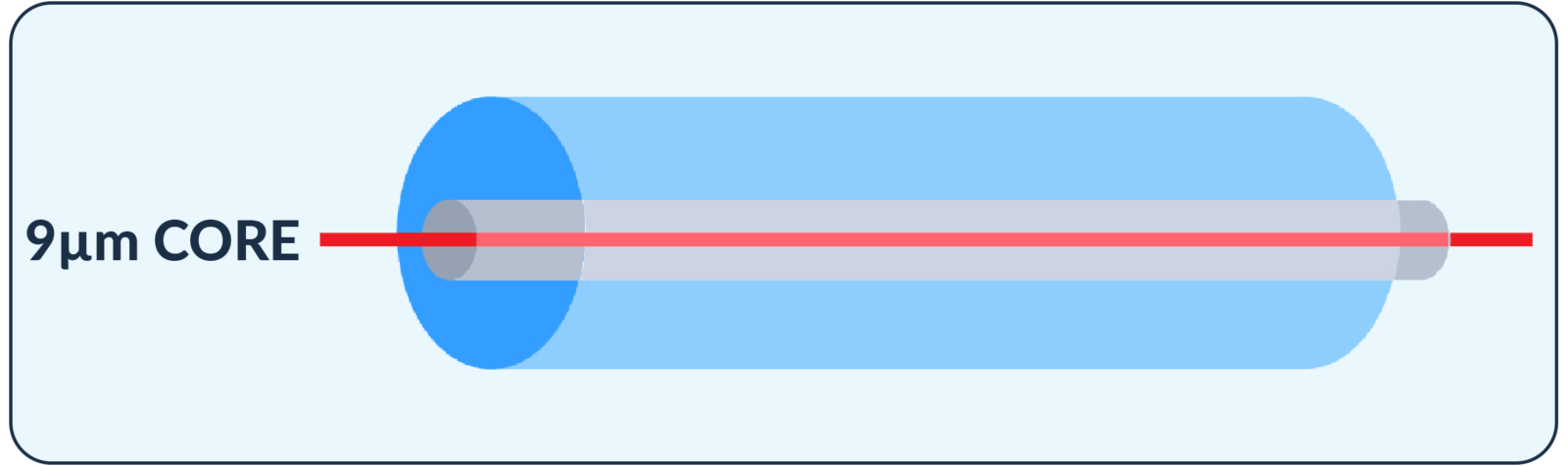 Singlemode (OS2) fiber carries a single light path through a smaller core, offering lower attenuation and effectively unlimited bandwidth over long distances — the right call for backbone runs, building-to-building links, and anything feeding high-speed switching. | Multimode (OM1, OM3, OM4)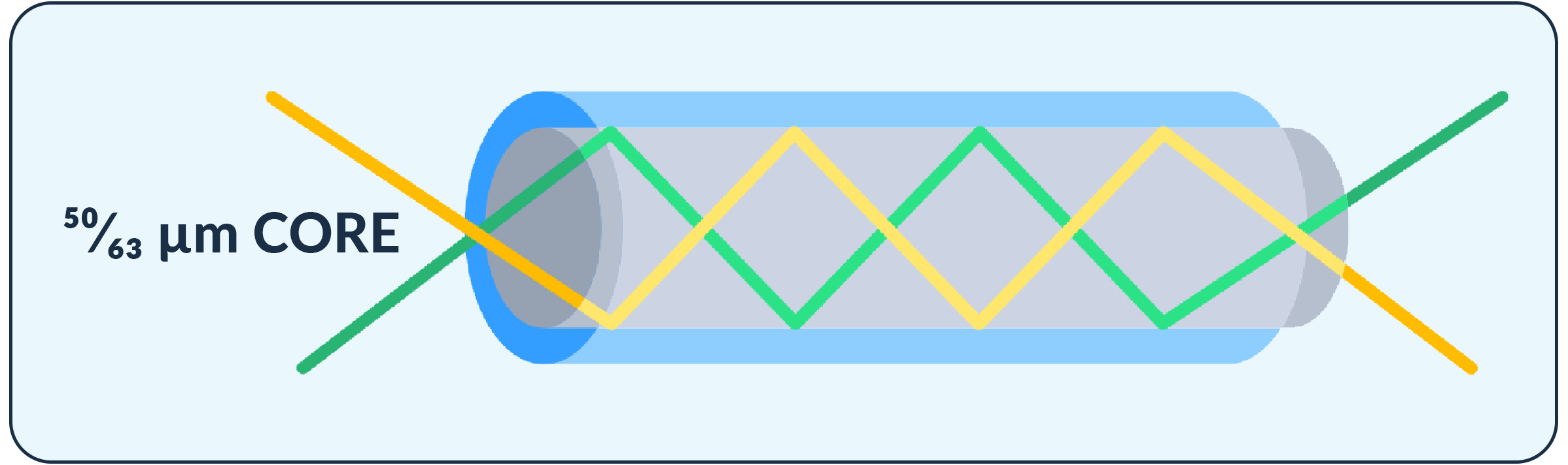 Multimode (OM1, OM3, OM4) remains the workhorse for shorter, high-bandwidth runs within an equipment room or data hall, where cost and ease of termination matter more than reach. |
What’s shifted for a lot of enterprise and campus jobs is fiber count. Where a closet used to run 12 or 24 strands, growing device counts are pushing many designs toward 48, 72, or 96 strands on the same pathway. Vertical Cable’s indoor/outdoor tight-buffered cable covers OS2, OM1, OM3, and OM4 in both plenum- and riser-rated jackets, with armored versions available where crush resistance matters — armored constructions eliminate the need for inner duct in many runs, which saves real installation time when there’s more fiber to pull. For pathways that leave the building, outside-plant loose-tube cable (non-armored and corrugated-steel armored) ranges from 12 to 144 fibers, with a dry, gel-free, all-dielectric core designed for duct, direct burial, and aerial-lash applications.
Structured Cabling Fundamentals: Build the Foundation Before You Build the Panel
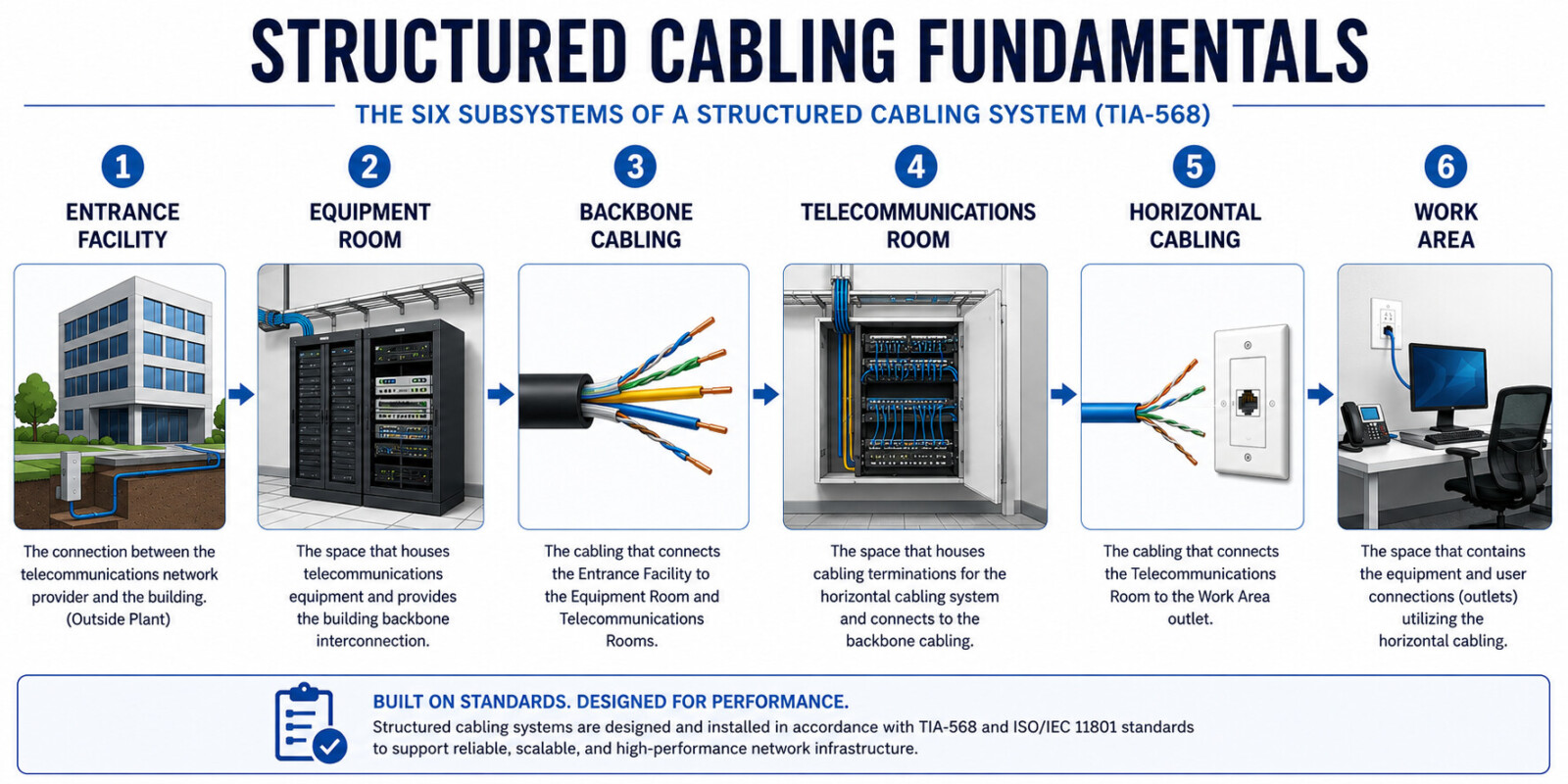
None of this works as a pile of individual products — it works as a structured cabling system designed around TIA-568 pathways, spaces, and labeling from day one. As fiber counts climb with Wi-Fi 7 access points, PoE cameras, and multi-gig switching, the jobs that hold up over time are the ones where the pathway was sized before the panel was ordered — conduit and cable tray rated for growth, one LGX footprint standardized across the building, and installation following BICSI best practices for bend radius, pulling tension, and separation from power. It’s less exciting than a headline, but it’s the difference between a network that scales cleanly and one that gets re-terminated every time demand jumps.
LGX Adapter Plates, Patch Panels & Enclosures: Organizing Fiber as Your Network Grows
As more fiber runs land in the same rack, your patch panel and enclosure strategy keeps the closet organized rather than turning it into a rat’s nest.
Vertical Cable’s LGX adapter plates are the building block — durable 1.5 mm aluminum plates available in singlemode and multimode configurations, meeting Telcordia GR-326-CORE standards, so you can mix connector types (LC, SC) and fiber counts (6, 8, 12, or 24 fibers per plate) on the same LGX-compatible footprint. Those plates load into dedicated 1RU LGX rack panels, paired with fiber-specific cable management bars to keep patch cords dressed rather than draped across the front of the rack.
For the enclosure itself, the right choice depends on how much fiber the space needs to hold:
Rack-Mount Enclosures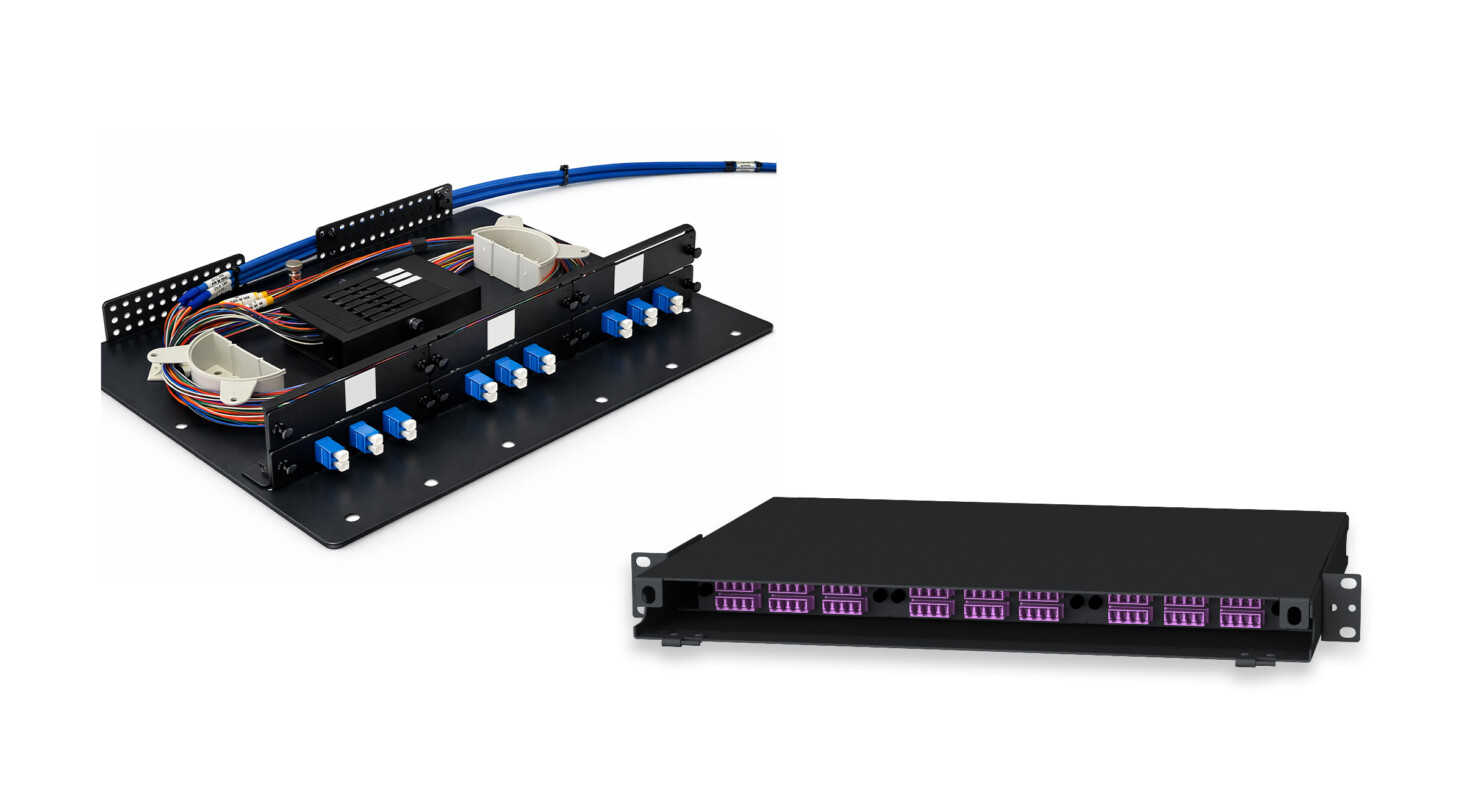 Rack-mount enclosures scale from a 1RU budget unit holding up to 72 fibers on three adapter plates, up to a 4RU standard-series unit holding up to 288 fibers across twelve plates — a meaningful jump in density per rack unit when rack space is the constraint. | Wall-Mount Enclosures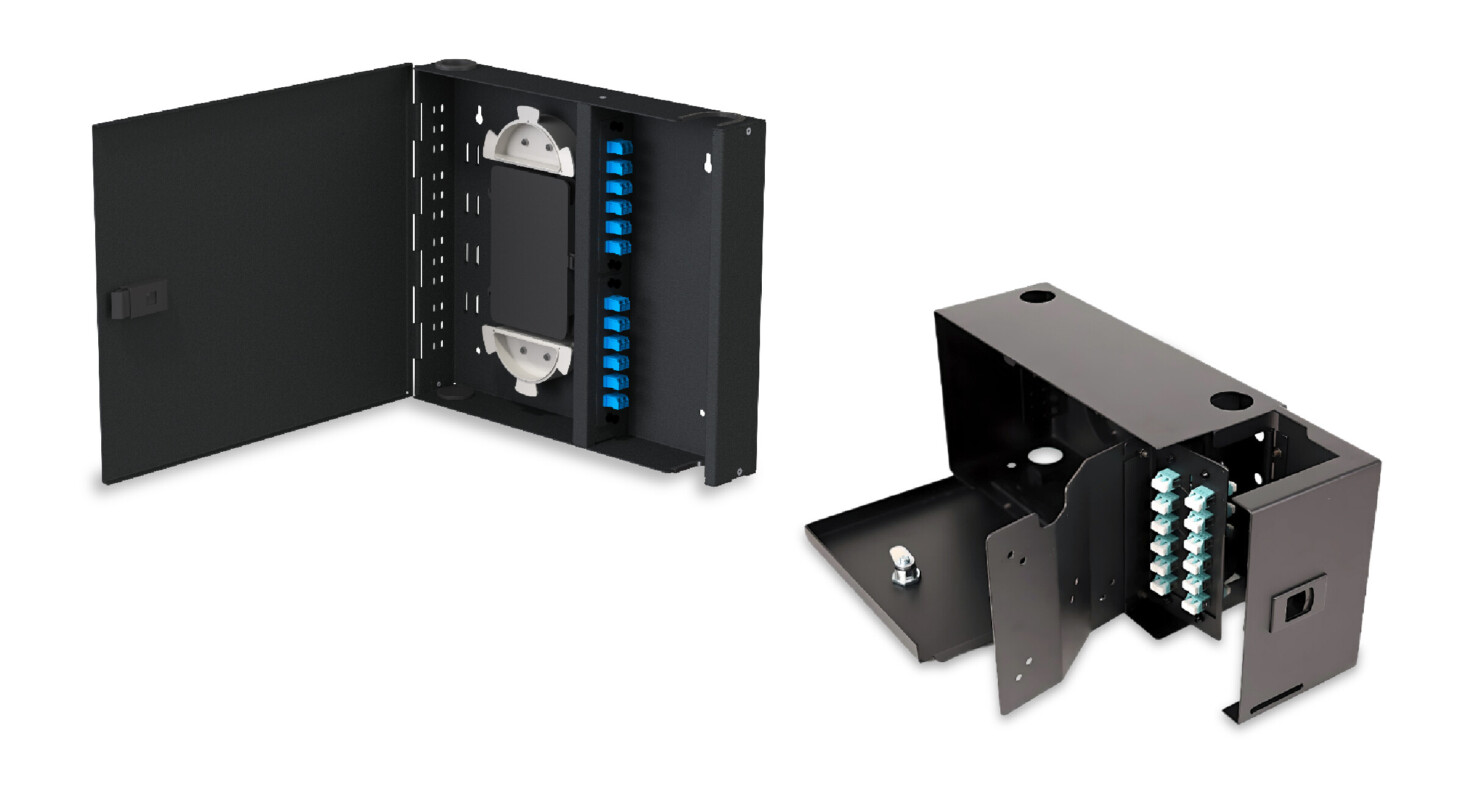 Wall-mount enclosures address the same density problem outside the rack — standard-series dual-door units hold up to 96 fibers with separate technician and customer-facing compartments, useful for MDU and telecom-closet applications. | DIN-Rail Cassettes and Connectivity Nodes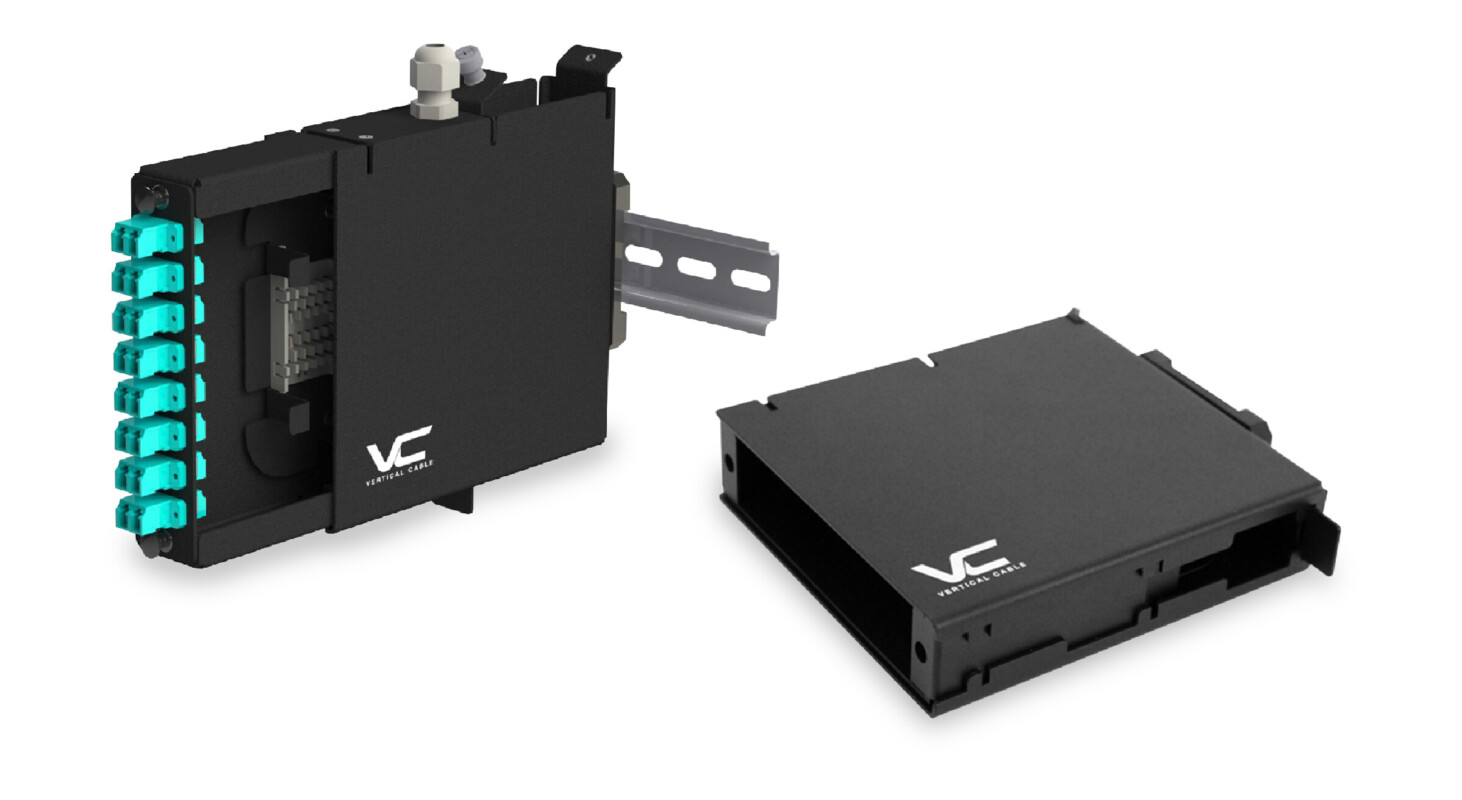 DIN-rail cassettes and connectivity nodes solve the opposite problem — tight cabinets, industrial enclosures, or edge sites where a full rack doesn’t fit, each holding up to 24 fibers on a single LGX adapter plate. When a job needs both formats in the same footprint, a DIN-rail-to-equipment-rack adapter bracket lets you mount 35 mm DIN-rail hardware directly into a standard 19-inch rack. |
Each of these is built around the same LGX adapter plate standard, so your termination strategy scales from a 24-fiber edge cabinet to a 288-fiber core rack without changing connector hardware.
Connecting Buildings and Campuses: Outside-Plant Fiber for Backbone Growth
Campus networks eventually hit the same scaling problem at a larger scale: connecting buildings without making the outside-plant run into the weak point in the design — whether that’s a new academic building, a hospital wing, or a portable classroom that needs to join the backbone.
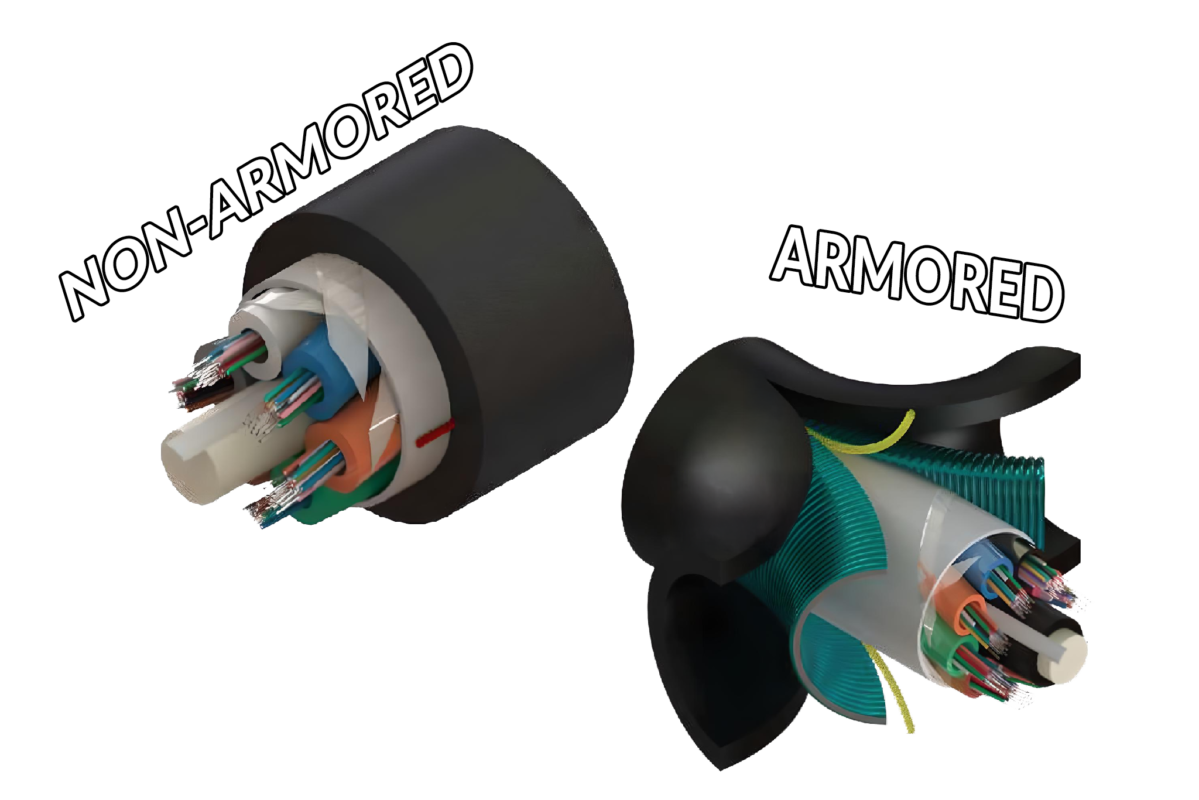 Available either non-armored or with corrugated steel armor for crush and impact resistance — built for duct, direct burial, and aerial-lashed runs up to 144 fibers. | 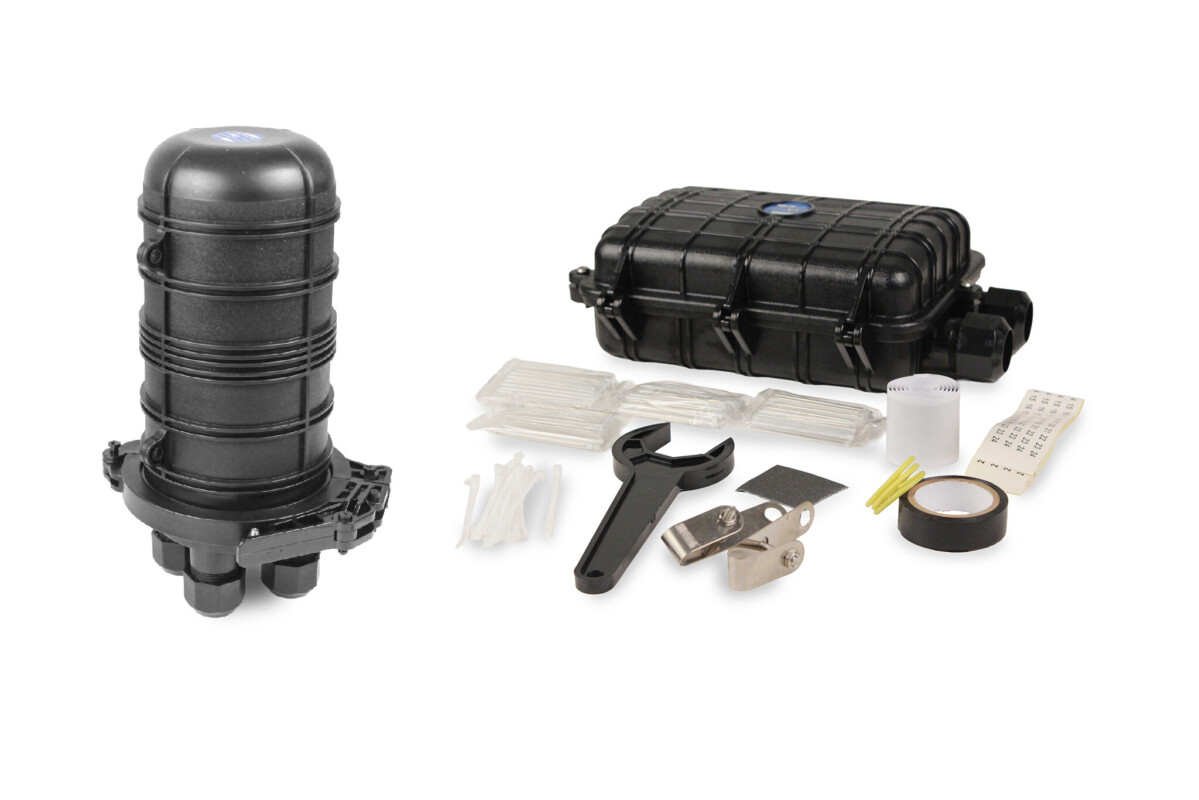 Scale from 48 fibers up to 288-fiber vertical-dome and horizontal in-line units, all IP68-rated for underground vault or aerial mounting. | OSP Transition Boxes | ||||
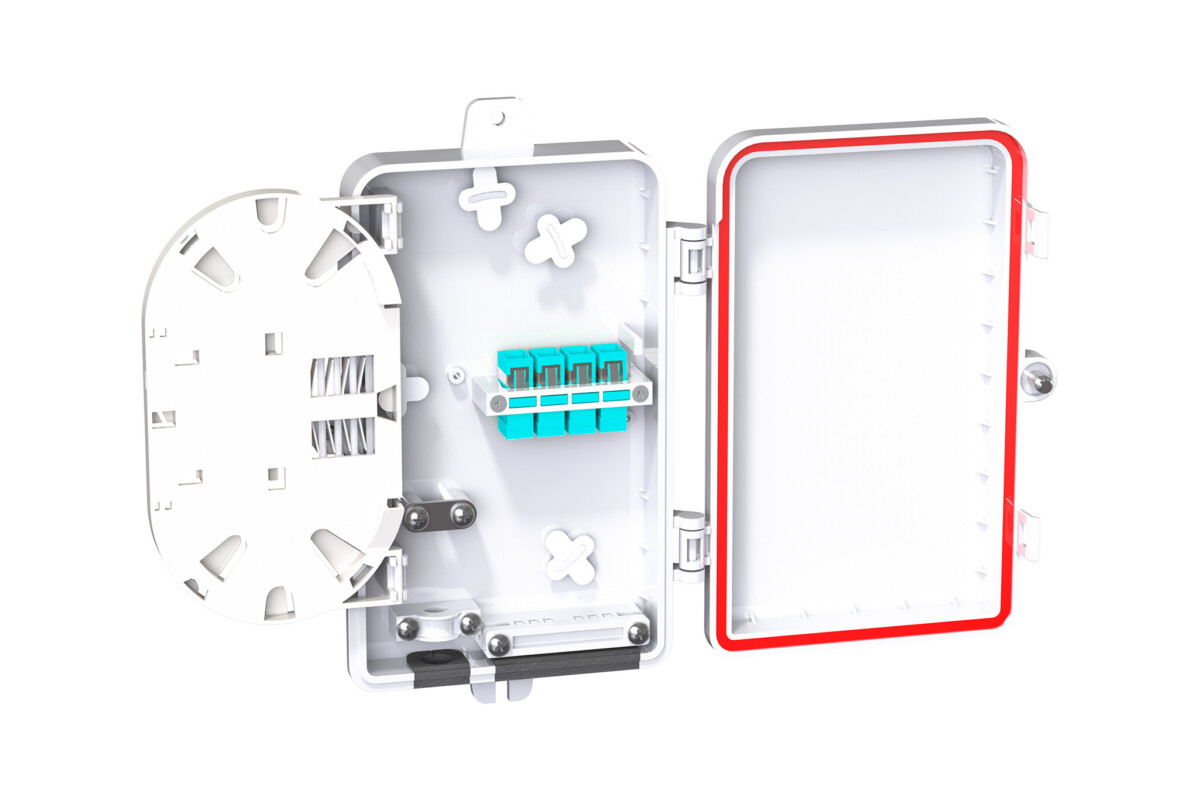
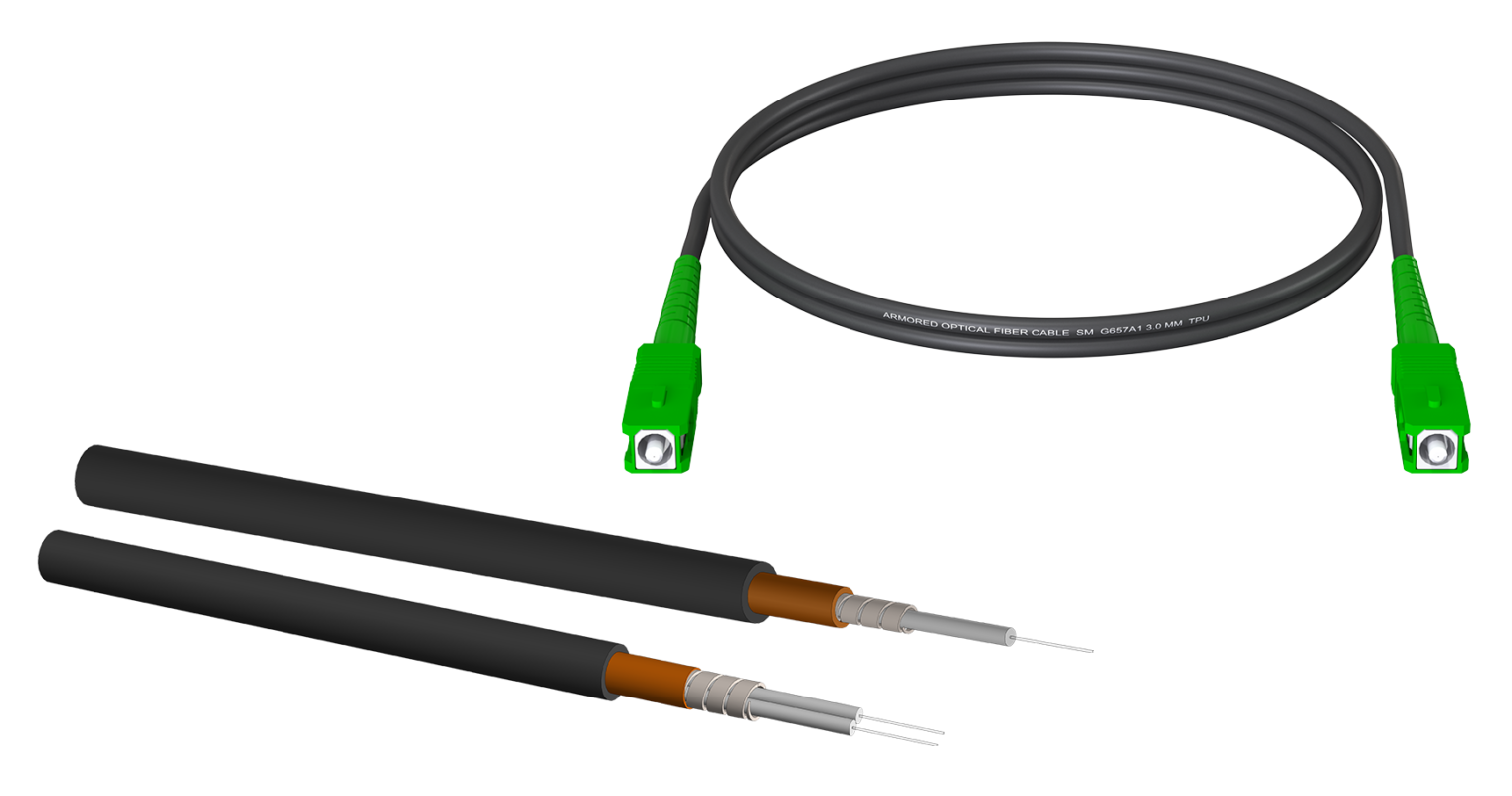 They handle the final connection at those transition points where a standard patch cord jacket wouldn’t hold up. | 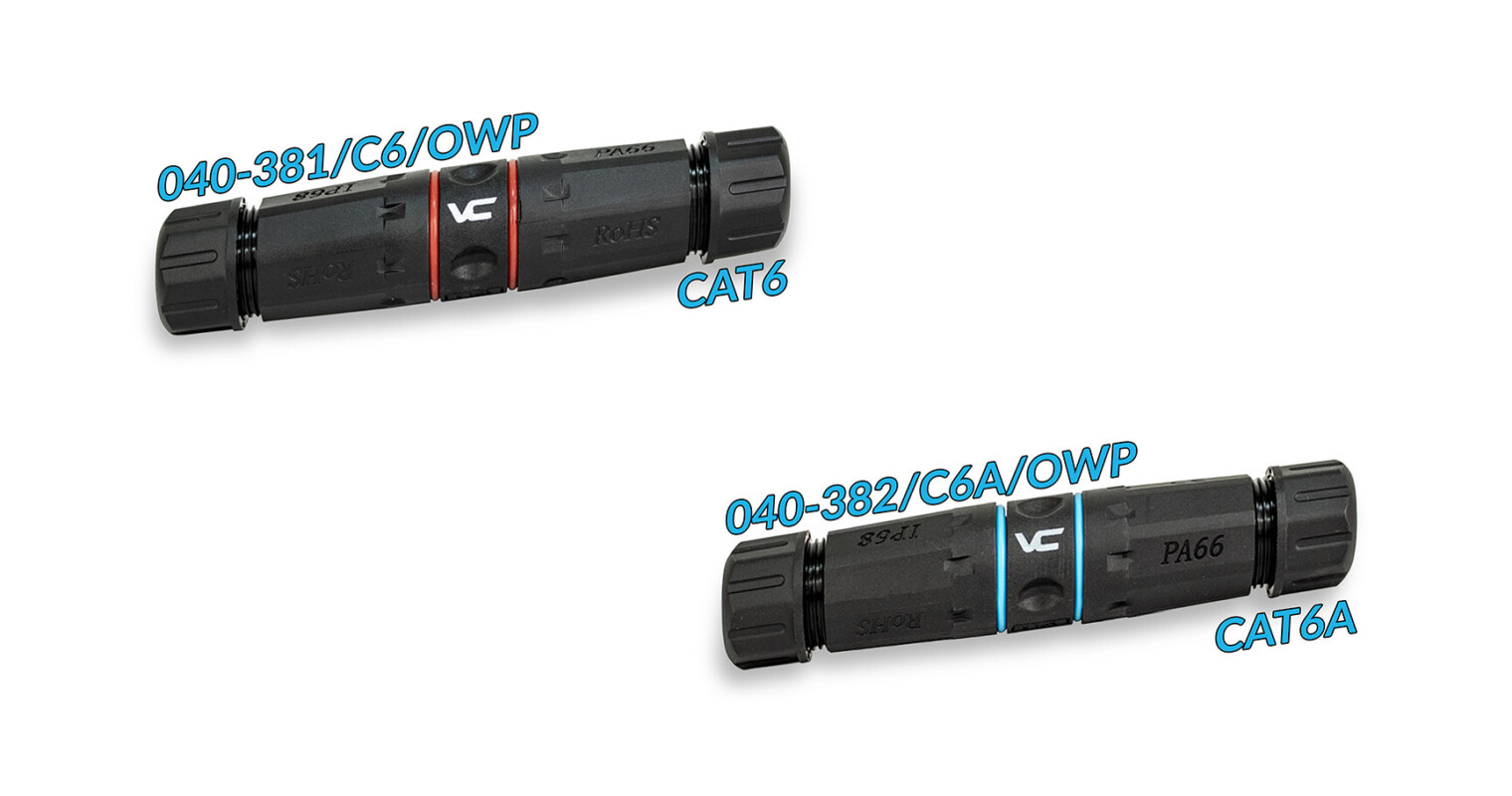 They let you extend an LC connection through an enclosure wall without exposing the splice to moisture or dust, for harsh or outdoor edge cabinets. | |||||
Plug-and-Play Connectivity: Pre-Terminated Assemblies for Contractors Without Splicing Tools
This is where the real opportunity is for most of the enterprise and SMB market: getting fiber into the hands of contractors who don’t own — or don’t want to own — a splicer and a polishing kit. The skilled-labor shortage makes on-site splicing a bottleneck on jobs of all sizes, and factory-terminated, plug-and-play fiber systems are the direct answer.
Vertical Cable’s modular connector assemblies are built around exactly that idea. The MPO pre-connectorized LGX cassettes arrive fully terminated and tested — pull them out of the box, mount them, and the connectivity is done — no field termination required — in singlemode or multimode (OM3/OM4) configurations with LC or SC connectors. For jobs where field customization is unavoidable, the splicing-cassette version ships with matching pigtails and splice holders instead, and a full range of factory-made patch cords (OM1/OM3/OM4 multimode, singlemode APC/UPC, in ST, LC, and SC combinations) rounds out the rest of the connections without a single field termination.
For quick field terminations without a splice at all, Vertical Cable’s mechanical fiber connectors — factory pre-polished and Telcordia GR-326-CORE rated — terminate singlemode and multimode fiber with just a stripper, cleaver, and cleaning wipes, no polishing or curing required. Whether a low-voltage contractor is adding their first fiber run or an IT installer is filling out a full closet, the goal is the same: less time in the closet, more predictable performance out of the box.
Why Connector Cleanliness Still Makes or Breaks Performance
As link speeds climb toward 10G and higher on singlemode runs, the margin for error at every connector shrinks.
WHY IT MATTERS A speck of contamination that a 1G link would shrug off can push a high-speed link’s insertion loss past spec — dirty or damaged end-faces remain one of the most common, and most preventable, causes of fiber link failures in the field. |
That makes inspection and cleaning routine, not optional, on any job involving singlemode fiber or high-fiber-count terminations. Vertical Cable’s optical fiber cleaning kits and inspection tools are built for pre-connection checks on every termination, whether it’s a single patch cord or a fully loaded 288-fiber enclosure. See the Optical Fiber Cleaning Kit and pair it with a mechanical splicing tool kit for a complete termination and verification workflow.
See Vertical Cable’s Fiber Lineup at ISE EXPO 2026
BOOTH #1229 — AUGUST 18–20, 2026 Music City Center, Nashville, TN. ISE EXPO bills itself as the convergence event for network infrastructure — fiber, wireless, core, access, and satellite — and draws thousands of engineers, operators, and network decision-makers from across the industry. Stop by the Vertical Cable booth to see the LGX adapter plates, pre-connectorized MPO cassettes, rack- and wall-mount enclosures, DIN-rail connectivity nodes, outside-plant splice closures, and cleaning/termination tools covered above — plus talk through fiber counts and panel strategy for your specific job with our team. |
Frequently Asked Questions
What is the difference between singlemode and multimode fiber?
Singlemode fiber uses a much smaller core to carry a single light path, giving it lower attenuation and effectively unlimited bandwidth over long distances — the standard choice for backbone and building-to-building runs. Multimode carries multiple light paths over a larger core, which limits distance but is generally more cost-effective for shorter, high-bandwidth runs within a building or data hall.
How do I know if I need singlemode or multimode fiber?
Start with distance and what’s on the other end of the link. If the run leaves the building, exceeds about 300 meters, or feeds high-speed switching, singlemode is the right call — it has less signal loss over distance than multimode. For shorter runs within a single equipment room or data hall, multimode is usually more cost-effective to terminate and still provides sufficient bandwidth for the distance involved.
What are the most common types of fiber optic connectors?
LC and SC connectors are the most widely used in enterprise structured cabling today. LC connectors have a smaller form factor and are the standard for high-density patch panels and enclosures, while SC connectors are larger and use a push-pull design, still common in legacy and telecom installations.
What is a fiber patch panel, and do I really need one?
A fiber patch panel is a mounted panel of adapter ports that lets you terminate incoming fiber cable and cross-connect it to equipment with patch cords, rather than splicing directly to the hardware. For any installation beyond a handful of direct connections, yes — a patch panel is essential. It centralizes terminations, simplifies moves/adds/changes, and protects splice points from repeated handling.
What are the 6 components of structured cabling?
A structured cabling system is built around six subsystems defined in TIA-568: entrance facilities, equipment rooms, backbone cabling, telecommunications rooms, horizontal cabling, and the work area. Designing to this framework from the start, rather than cabling ad hoc, is what makes a network scalable as fiber counts and equipment change.
What is singlemode fiber best for?
Singlemode fiber is best suited for long-distance and high-bandwidth applications — campus backbones, building-to-building links, and any connection feeding high-speed switching where low signal loss over distance matters more than termination cost. It’s the right default whenever a run needs headroom for the next few years of growth, not just today’s device count.