

CAT6 is rated for 250 MHz, but many cables test well beyond that. So what does it actually mean when a cable is marketed as “exceeding TIA standards”?
If you work in structured cabling, you’ve likely seen that claim on spec sheets and cable jackets. You may have even encountered products labeled CAT6E or CAT6E+. These designations sound official, but only one of them is.
At Vertical Cable, we believe installers and network designers deserve clear, jargon-free answers about the standards that define Ethernet cabling performance. In this post, we’ll break down what TIA-568 actually defines, what “exceeds standards” really means on a spec sheet, and why CAT6E continues to create confusion in the field.
What Are Ethernet Cable Standards?
Ethernet cable standards define the minimum electrical performance requirements for twisted-pair network cables used in structured cabling systems. These standards ensure that cables from different manufacturers remain interoperable and capable of supporting modern network speeds.
In North America, the primary standard governing structured cabling performance is published by the Telecommunications Industry Association as ANSI/TIA-568. This specification defines critical transmission performance thresholds, including:
- Bandwidth (frequency range)
- Insertion loss (attenuation)
- Near-end crosstalk (NEXT) and far-end crosstalk (FEXT)
- Return loss
- Propagation delay and delay skew
While TIA defines cable performance requirements, IEEE defines the Ethernet protocols that run over those cables, such as 1000BASE-T (Gigabit Ethernet) and 10GBASE-T (10-Gigabit Ethernet). BICSI publishes installation best practices separately, which guide structured cabling design in commercial environments. Together, these organizations form the technical foundation of modern network infrastructure
Ethernet Cable Categories Explained
Twisted-pair Ethernet cables are grouped into categories based on minimum transmission performance as defined by TIA standards. Each category specifies a minimum frequency rating and the maximum network speeds the cable can reliably support at standard installation lengths.
CATEGORY | MIN. FREQUENCY | MAX SPEED | TYPICAL USE |
|---|---|---|---|
CAT5E | 100 MHz | 1 Gbps / 100m | Basic Gigabit Networks |
CAT6 | 250 MHz | 10 Gbps / ~55m | Office & Commercial LAN |
CAT6A | 500 MHz | 10 Gbps / 100m | High-Density, PoE++ |
CAT8 | 2000 MHz | 25–40 Gbps | Data Centers |
CAT5E remains widely deployed in Gigabit networks and legacy commercial environments. CAT6 and CAT6A are the current standards for new commercial installations that require higher bandwidth, Power over Ethernet (PoE++), and future scalability.
What Does “Exceeds TIA Standards” Mean?
Many cable manufacturers advertise products that “exceed TIA standards.” This phrase can sound like marketing exaggeration, but it often refers to a real concept known as performance headroom.
The ANSI/TIA-568 standard establishes minimum performance thresholds. A cable that exceeds those thresholds during factory sweep testing has additional headroom above the floor, meaning it maintains stronger signal integrity in real-world conditions, particularly in long runs, high-interference environments, or installations approaching maximum channel length.
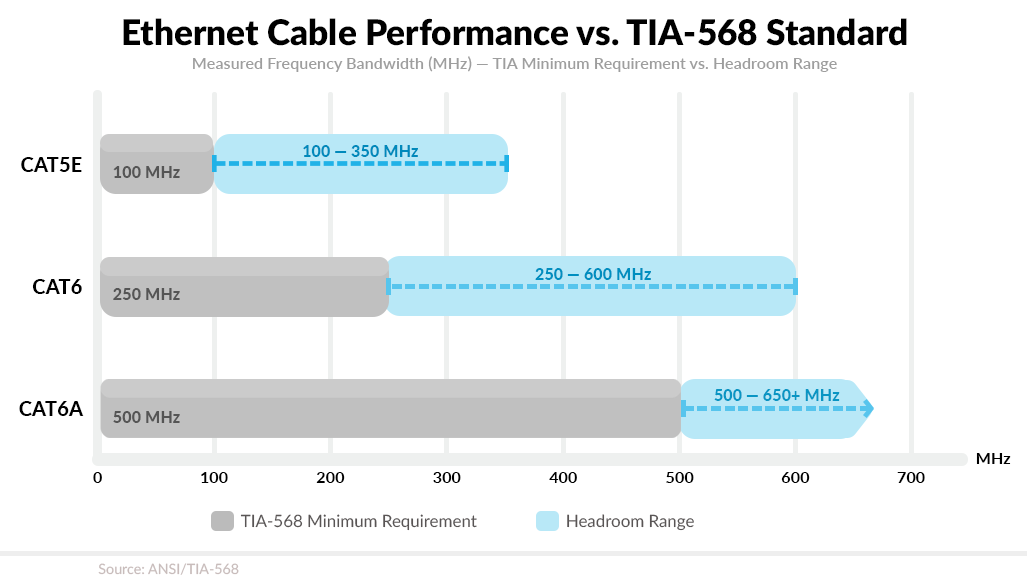 |
IMPORTANT: A cable’s official category rating is always determined by the minimum standard it meets, not the highest frequency it achieves during testing. A CAT6 cable that tests to 450 MHz is still a CAT6 cable, not a new category.
For example, standard CAT6 is rated for 10 Gbps up to approximately 55 meters. A cable with extra performance headroom may sustain reliable 10 Gbps transmission slightly beyond that threshold under favorable installation conditions, but it remains certified as CAT6.
Is CAT5E a Real Ethernet Standard?
Although it appears on cable jackets and distributor listings, CAT6E is not an official Ethernet cable category recognized by TIA standards.
The formal progression of TIA-recognized twisted-pair categories is:
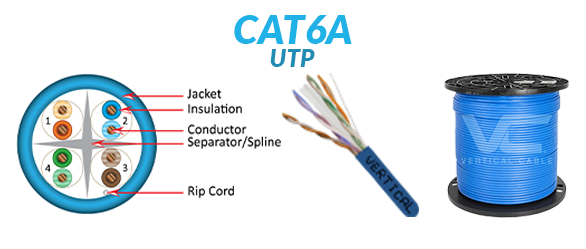
The “A” in CAT6A stands for Augmented Category 6. It doubles the bandwidth of standard CAT6 from 250 MHz to 500 MHz and supports full 10-Gigabit Ethernet at the standard 100-meter channel length — which standard CAT6 cannot reliably achieve.
The term CAT6E has been used by some manufacturers as a marketing label for CAT6 cables with above-minimum performance headroom. While the underlying cable may perform well, the designation itself has no standing in the ANSI/TIA-568 standard.
For installers and network designers specifying infrastructure, always rely on official TIA category designations. When a vendor quotes a non-standard label, ask for third-party certification documentation against the applicable TIA specification.
Why Ethernet Cable Standards Matter for Network Installations
Adhering to recognized cabling standards is foundational to building reliable, scalable network infrastructure. Here is why standards compliance matters in practice:
Interoperability Standards-compliant cables, connectors, patch panels, and switches are designed to work together regardless of manufacturer. Non-standard designations introduce ambiguity that can cause compatibility issues during installation or troubleshooting. |
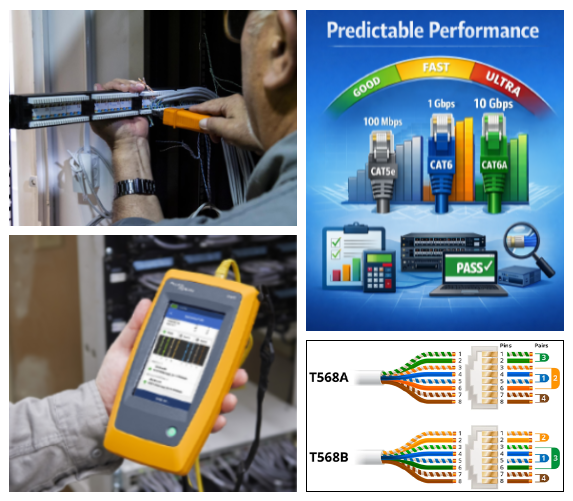
Predictable Performance Certified cables are validated to support the Ethernet speeds they are rated for. Knowing the exact TIA category of your cable eliminates guesswork when designing channel budgets and verifying installation quality. |
Certification Testing Structured cabling installations are tested using field certification equipment, such as Fluke Networks testers, to verify compliance with TIA channel performance requirements. Your certification results reference specific TIA standards; non-standard cable labels do not map cleanly to these test suites. |
Future Scalability Installing CAT6A instead of CAT6 adds minimal upfront cost but significantly extends the infrastructure’s viability. With 500 MHz bandwidth and full 10GbE support over 100 meters, CAT6A supports emerging PoE++ applications, and Multi-Gig Ethernet is being adopted as it becomes more widely used. |
 |
Vertical Cable and Industry Standards
Reliable network infrastructure starts with cabling products engineered to meet recognized industry specifications.
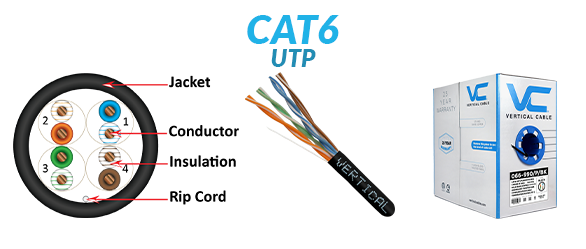
Vertical Cable designs and manufactures structured cabling products, including CAT6 and CAT6A Ethernet cables, to meet the performance requirements defined by ANSI/TIA-568 standards. Many of our cable designs are engineered with additional performance headroom above TIA minimums, providing consistent signal integrity across a range of real-world installation environments.
By specifying products with documented TIA compliance, installers and network designers can build infrastructure that remains compatible, certifiable, and ready for future technology upgrades.
 |  |
Frequently Asked Questions
What is the TIA-568 standard?
ANSI/TIA-568 is the primary structured cabling standard used in North America. Published by the Telecommunications Industry Association, it defines the minimum electrical performance requirements and installation practices for telecommunications cabling in commercial buildings. It is the specification that defines official Ethernet cable categories such as CAT5e, CAT6, and CAT6A.
What frequency is CAT6 cable rated for?
CAT6 cable is rated for a minimum bandwidth of 250 MHz according to the ANSI/TIA-568 standard. Many CAT6 cables test at significantly higher frequencies during manufacturing sweep testing, but 250 MHz is the official category specification.
Can CAT6 support 10-Gigabit Ethernet?
Yes, CAT6 can support 10-Gigabit Ethernet (10GBASE-T) for channel lengths up to approximately 55 meters, depending on installation conditions and alien crosstalk levels. For full 10 Gbps performance at the standard 100-meter channel length, CAT6A is required.
What is the difference between CAT6 and CAT6A?
CAT6A (Augmented Category 6) doubles the bandwidth of standard CAT6 from 250 MHz to 500 MHz. It is specifically designed to support 10-Gigabit Ethernet over full 100-meter channels and provides better alien crosstalk isolation, making it the preferred choice for high-density environments, PoE++ applications, and future-proof installations.
Is CAT6E a real cable standard?
No. CAT6E is not recognized as an official Ethernet cable category by ANSI/TIA-568 or any recognized standards body. The official next step above CAT6 is CAT6A. Some manufacturers have historically used the CAT6E label as a marketing designation for CAT6 cables with above-minimum performance, but the term has no formal technical standing.
What does ‘exceeds TIA standards’ mean on a cable spec sheet?
It means the cable was tested at the performance levels specified in the applicable TIA category specification. This additional margin, called performance headroom, can provide more reliable signal transmission in challenging real-world environments, but it does not place the cable in a higher official category.