

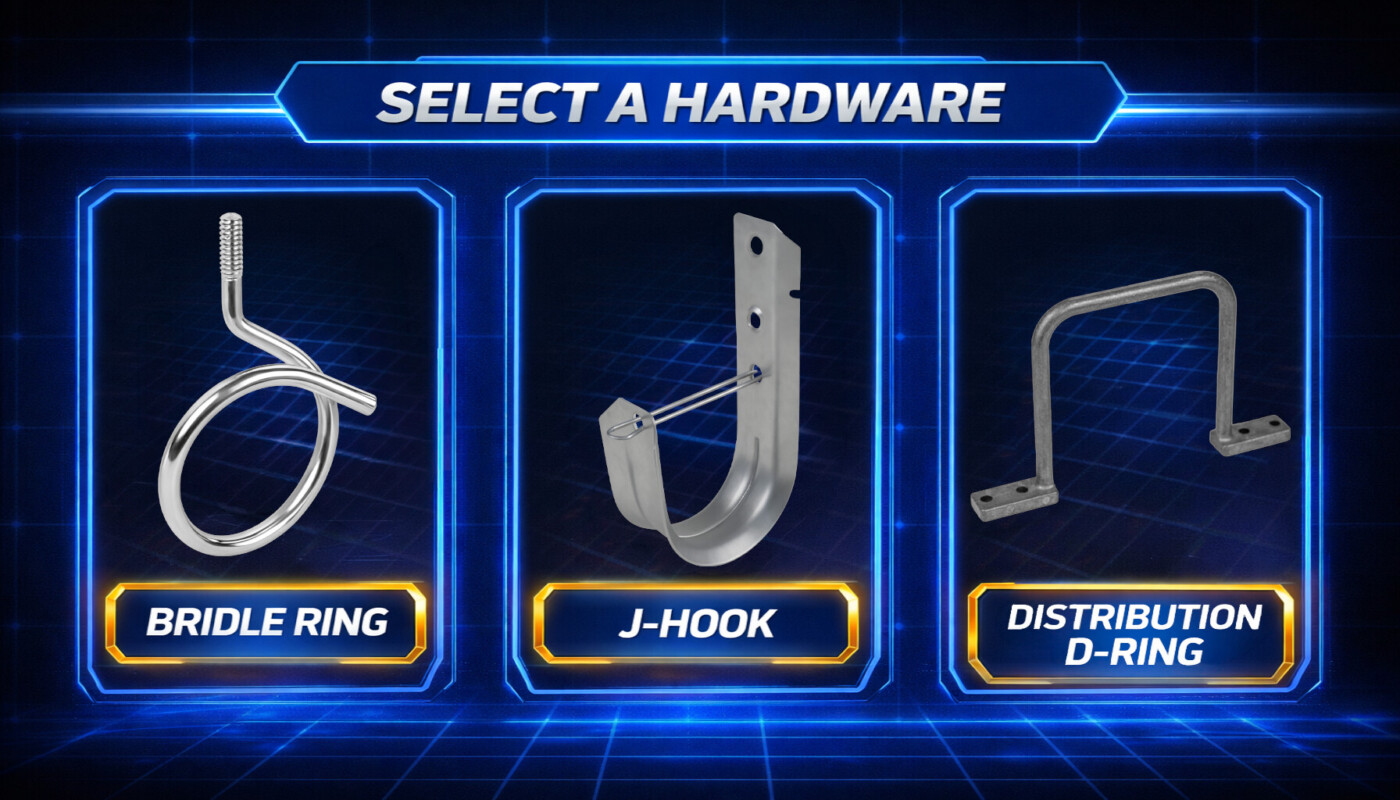
Choosing between a bridle ring vs a J-hook, or deciding when a D-ring is the better option, is one of the first decisions installers face when designing a structured cabling pathway. The hardware you select directly affects load distribution, long-term cable integrity, and how easily the system can be serviced or expanded down the road.
This guide breaks down how bridle rings, J-hooks, and D-rings each work, where they belong in a low-voltage installation, and the key factors that should drive your selection.
Why Cable Support Hardware Matters
Low-voltage cable is not engineered to bear sustained mechanical stress on its own. When cable is unsupported or supported incorrectly, several problems can develop over time:
- Jacket deformation that compromises transmission performance
- Restricted airflow around tightly packed bundles
- Strain at termination points, increasing return loss and insertion loss
- Difficult adds, moves, and changes during system updates
NEC Article 300.11 requires that conductors be properly supported to prevent physical damage. While open-cable support devices are not governed by conduit fill tables, installers remain responsible for maintaining the manufacturer-specified bend radius and cable integrity throughout the run.
Bridle Rings: Targeted Support Points
A bridle ring is an open-loop cable support device used to create fixed anchor points along a cable pathway. Unlike enclosed raceways, bridle rings allow cables to rest naturally without full containment, making them well-suited for installations that need flexibility without bulk.
When to Use a Bridle Ring
Bridle rings work best for:
- Drop locations and transition points within a run
- Shorter horizontal or vertical pathway segments
- Installations where full-length continues support is unnecessary
- Compact spaces where J-hook hardware would be difficult to mount
Bridle Ring Mounting Options
Mounting style determines where and how a bridle ring can be installed
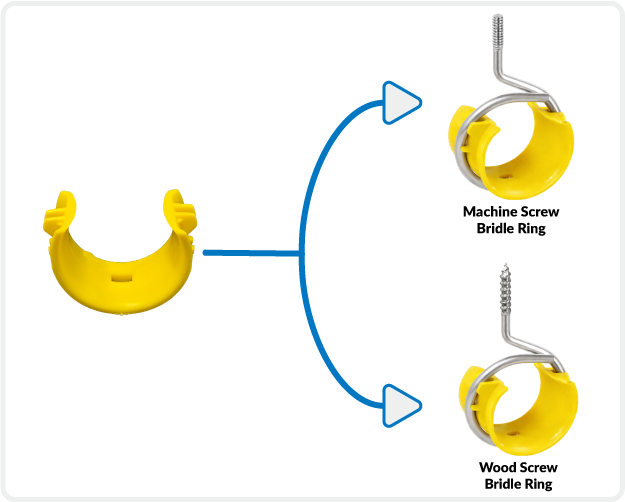
- Machine screw bridle rings attach to threaded rod, beam clamps, or metal support systems
- Wood screw bridle rings install directly into framing members, such as joists or studs
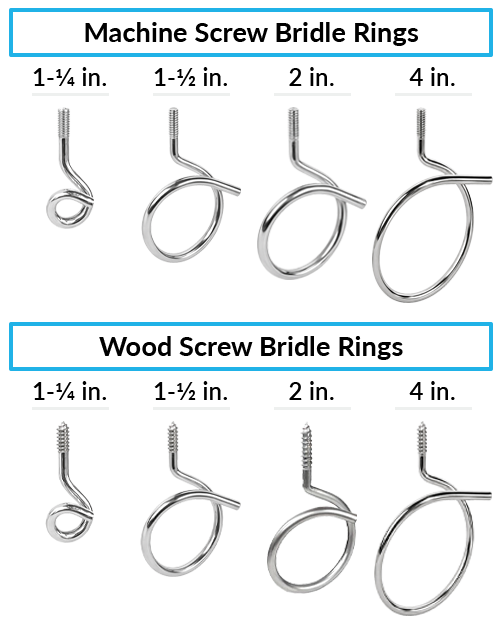
Selecting the correct mounting style early prevents rework and ensures a secure, code-compliant installation.
J-Hooks: Continuous Horizontal Pathways
When comparing a bridle ring vs J-hooks for long horizontal runs, J-hooks are almost always the better choice. Their curved profile distributes cable weight over a larger contact area and supports larger bundles across extended distances, reducing the concentrated stress points that individual bridle rings create.
When to Use J-Hooks
J-hooks are the preferred cable support solution for:
- Open office corridors and commercial ceiling spaces
- Data center horizontal cable distribution
- Any project where cable counts are expected to grow over time
- Runs requiring consistent, evenly spaced support across 50 feet or more
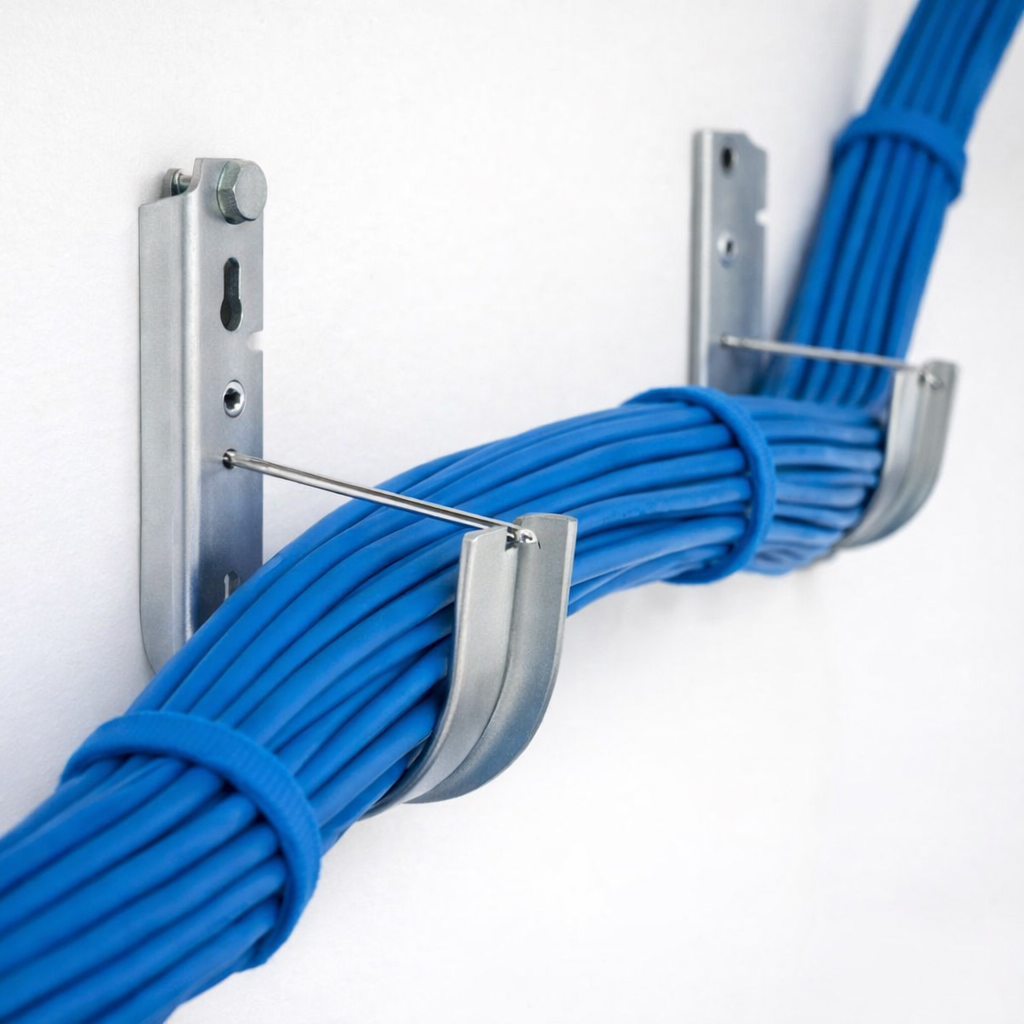
Because J-hooks create a continuous pathway rather than isolated support points, they scale more naturally with increased cable volume. They also reduce the risk of cables sagging between supports, which can stress jacket materials and connectors over time.
D-Rings: Vertical and Wall Routing
D-rings serve a fundamentally different purpose than bridle rings or J-hooks. Rather than acting as primary horizontal support hardware, D-rings are designed to guide, organize, and dress cable as it moves vertically along walls, racks, or backboards.
When to Use D-Rings
D-rings are the appropriate choices for:
- Telecommunications room wall organization
- Patch panel cable dressing and routing
- Rack-to-rack or rack-to-wall cable management
- Vertical cable routing alongside equipment cabinets
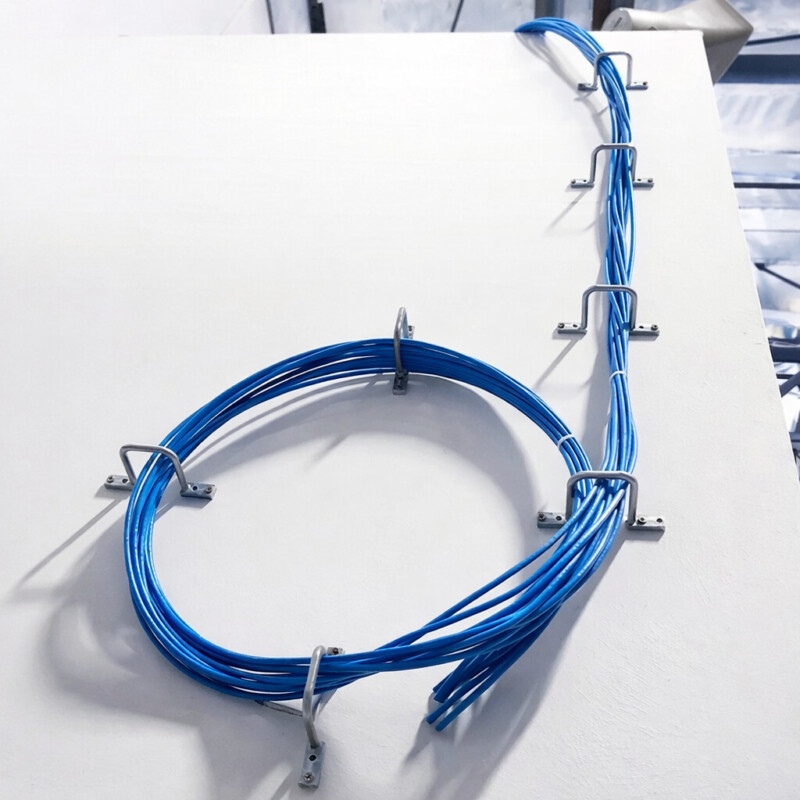
In telecom rooms, well-placed D-rings keep cables organized, reduce clutter, and make future moves and changes considerably easier. They are not a substitute for horizontal support hardware; they complement it.
Understanding Cable Capacity in Open Support Systems
One of the most common installer questions when choosing between a bridle ring vs j hook is: how many cables can these supports actually hold?
Unlike conduit systems, which are governed by NEC Chapter 9 fill tables, open cable support hardware does not have a code-defined fill percentage. Instead, capacity should be evaluated using practical criteria:
- No visible compression of cable jackets at any support point
- Manufacturer-specified bend radius maintained throughout the run
- Adequate airflow is maintained within the bundle
- Room reserved for future cable additions without redesigning the pathway
Factors That Determine Practical Capacity
The actual number of cables that can be properly supported depends on several variables working together:
- Ring or hook inside diameter
- Cable outer diameter (typically 0.22″–0.27″ for category cables)
- Installation technique and bundle stacking behavior
- Environmental conditions, including temperature and humidity
As a general rule, cables should rest naturally within the support hardware, not be forced in. If you are compressing jackets or exceeding a natural stacking height, it is time to move to a larger size or add an additional support point.
BICSI and other structured cabling standards bodies emphasize proper support spacing and load management as best practices, even though no specific fill percentage is published for open cable support devices.
Snap-On Saddle Inserts: Added Protection for High-Count Runs
For installations approaching higher cable counts or where jacket protection is a priority, snap-on saddle inserts can be added inside compatible bridle rings. These accessories increase the contact surface area at the support point, reducing localized pressure and minimizing abrasion over time.
Saddle inserts are particularly useful when:
- Cable bundles are dense and approaching the practical capacity of the ring
- Cables will be pulled or repositioned frequently
- Long-term durability is a priority in high-traffic or demanding environments
Installation Factors That Drive Hardware Selection
The right choice between a bridle ring vs J-hooks, or when to incorporate D-rings, comes down to evaluating these core project variables before you specify hardware:
- Cable Volume: Higher cable counts favor J-hooks over individual bridle rings
- Mounting Surface: Wood framing calls for wood screw versions; metal framing or threaded rod requires machine screw hardware
- Pathway Length: Long horizontal corridors benefit from continuous J-hook systems
- Future Expansion: Projects expecting growth should avoid tightly packed support points
- Accessibility: Telecom rooms benefit from organized D-ring routing on racks and walls
Evaluating these factors during the design phase, before cable is pulled, helps prevent costly rework and ensures the pathway performs reliably from day one.
Quick-Reference: Bridle Ring vs J-Hook vs D-Ring
SCENARIO | RECOMMENDED HARDWARE | KEY REASONS |
|---|---|---|
Long horizontal corridor run | J-Hook | Continuous pathway, even load distribution |
Targeted drop or transition point | Bridle Ring | Fixed support without full containment |
Wood framing installation | Wood Screw Bridle Ring | Direct attachment to framing members |
Threaded rod or metal support system | Machine Screw Bridle Ring | Compatible with standard metal framing |
Rack or wall cable dressing | D-Ring | Guides vertical/lateral routing and dressing |
High cable count horizontal run | J-Hook | Distributes load; reduces jacket stress |
Dense bundle needing jacket protection | Bridle Ring + Saddle Insert | Increased contact area, reduced abrasion |
Frequently Asked Questions
Is there a code-defined fill percentage for bridle rings?
No. Open cable support devices like bridle rings and J-hooks are not subject to NEC Chapter 9 conduit fill tables. Installers should avoid visible cable compression and follow structured cabling best practices from organizations like BICSI to determine appropriate cable counts per support.
What is the main difference between a bridle ring vs J-hook?
A bridle ring provides an isolated fixed-point support, useful at drops, transitions, and short spans.
A J-hook creates a continuous horizontal pathway designed to support larger cable bundles over long distances.
For runs exceeding 15–20 feet with multiple cables, J-hooks are generally the better choice.
How do I choose the right bridle ring size?
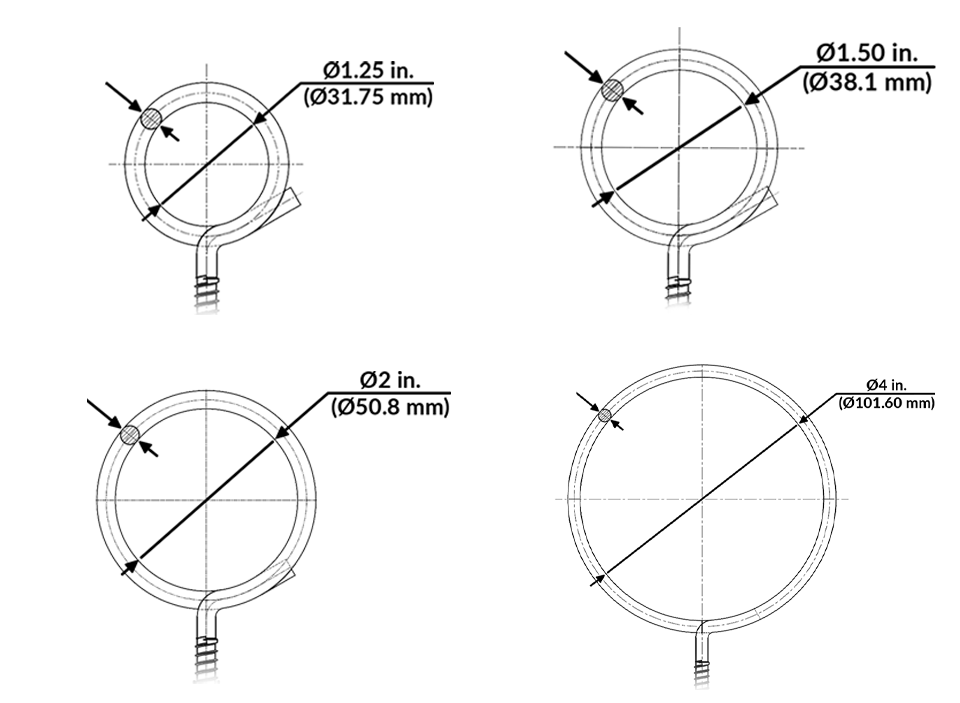
Select ring size based on the outer diameter of your cable bundle. Cables should rest naturally inside the ring, without jacket compression. For category cables with an approximate 0.25″ outer diameter, most installers use 1″ to 1-¼” inside-diameter rings for small bundles and step up as volume increases.
When should I use a saddle insert with a bridle ring?
Use a snap-on saddle insert when cable counts are approaching the practical capacity of the ring, or when long-term jacket protection and reduced abrasion are priorities. Saddle inserts are especially useful in high-traffic areas where cables may be repositioned over time.
Can D-rings replace J-hooks or bridle rings?
No. D-rings are cable management accessories designed to dress and organize cables along walls and racks, not to provide primary horizontal support. They should be used alongside bridle rings or J-hooks, not as a substitute for them.